

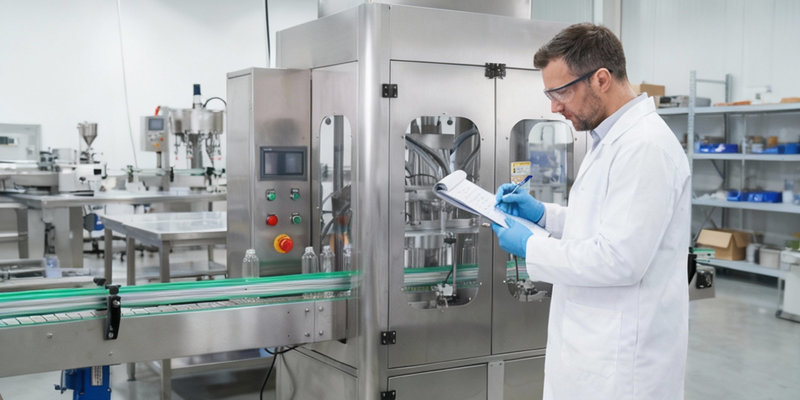
Choosing the wrong filling machine creates production bottleneck1s and wastes product. This costly mistake can hurt your profits and brand. Let's make sure you select the right one.
To choose the right liquid filling machine2, focus on four key areas: your product's type and viscosity3, the required accuracy, your production volume4, and any hygiene or compliance standards like GMP. Matching the machine's technology to these factors is essential for efficient and reliable production.
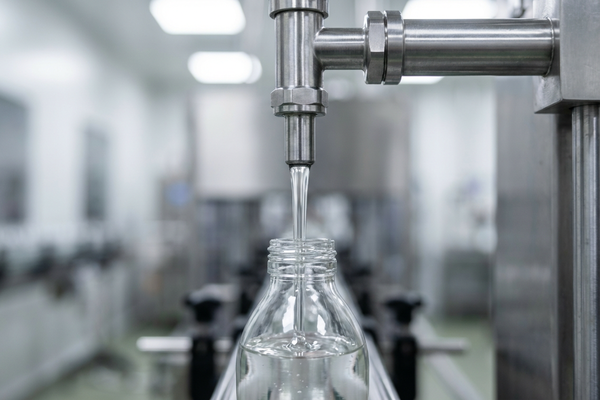
That's the short answer, but the details are what truly matter. Every business has unique needs, and a small oversight now can cause big headaches later. I've seen it happen many times over my years in this industry. Let's break down each point so you can make a confident decision and find a machine that helps your business grow, not hold it back.
How do product type and viscosity3 affect your choice of filling machine?
Trying to fill thick cream with a machine designed for water? It's a recipe for inaccurate fills, clogs, and a huge mess. This mistake costs you valuable time and product.
Your product's viscosity3, or thickness, is the most critical factor. Thin, watery liquids work well with gravity fillers, while thick, viscous products like lotions or honey require piston or servo-driven fillers5 to push the product accurately.
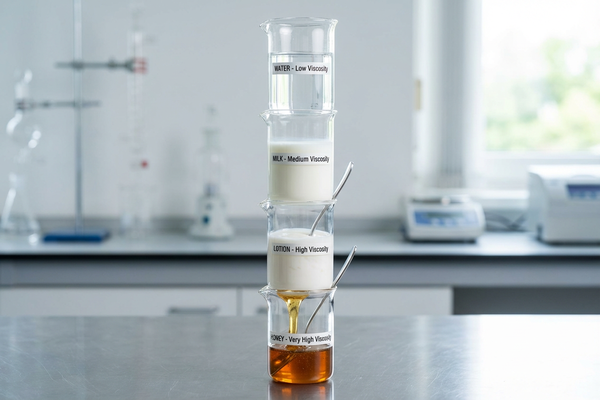
Let's dive deeper into this. When we talk about viscosity3, we are talking about a liquid's resistance to flow. Getting this wrong is the number one mistake I see new buyers make. A machine that works perfectly for juice will be completely useless for a thick sauce. We need to match the filling technology to the product.
Matching Filler Type to Your Product
The technology inside the machine is what handles the liquid. Here’s a simple breakdown:
- Gravity and Overflow Fillers: These are great for thin, free-flowing liquids like water, juice, or window cleaner. They work by filling the bottle to a specific level, which is perfect for clear bottles where the visual fill-height is important. They are simple and cost-effective.
- Piston Fillers: This is your go-to for anything with thickness. Think lotions, creams, sauces, gels, and even products with small particulates. A piston pulls a set volume of product into a cylinder and then pushes it out into the container. It is extremely accurate by volume.
- Servo-Driven Fillers: These are a high-tech version of piston fillers6. An electronic servo motor controls the piston movement with incredible precision. This gives you complete control over the fill speed, allowing you to slow down at the end to prevent splashing or foaming. They are ideal for high-value products or difficult-to-handle liquids.
Here is a table to make it clearer:
| Liquid Viscosity | Common Products | Recommended Filler Type | Why? |
|---|---|---|---|
| Water-Thin | Juice, Tea, Solvents, Ink | Gravity, Overflow | Fast, simple, and provides a consistent cosmetic fill level. |
| Semi-Viscous | Syrups, Light Lotions, Oils | Piston, Servo | Provides accurate volumetric fill for more expensive products. |
| Viscous | Creams, Honey, Gels, Paste | Piston, Servo | Necessary force to move thick product accurately without drips. |
I remember a client who tried to fill a thick honey with a simple gravity filler. The honey barely moved, and production was at a standstill. We switched them to a piston filler, and they were immediately able to hit their production targets with perfect accuracy. Understanding your product first saves you from this kind of expensive trial and error.
What's the difference between semi-automatic and fully automatic systems7?
Everyone thinks a fully automatic line is the ultimate goal. But the high cost and complex setup can be a huge burden for many businesses, especially if you have a variety of products.
Semi-automatic fillers offer lower cost and greater flexibility, making them ideal for small-to-mid-sized businesses or those with many different products. Fully automatic systems are built for high-speed, high-volume production of a single product with minimal changeovers.
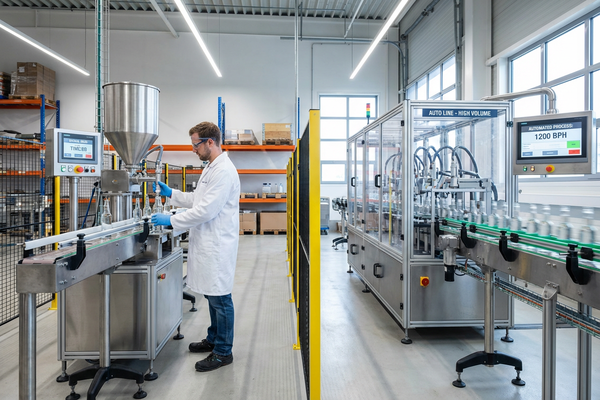
This choice has a massive impact on your budget, your floor space, and your daily operations. It’s not just about speed; it's about what is most efficient for your specific business model. I've helped countless customers navigate this decision, and it almost always comes down to a balance between volume, variety, and budget.
When to Choose Which System
Let's break down the key differences to help you decide. There is no "better" option, only the "right" option for your needs.
| Consideration | Semi-Automatic System | Fully Automatic System |
|---|---|---|
| Production Volume | Small to medium batches | Large-scale, continuous runs |
| Product Variety | Excellent for many different SKUs | Best for one or few products |
| Upfront Cost | Lower initial investment | Higher capital investment |
| Operator Involvement | Requires an operator for each cycle | Minimal operator oversight needed |
| Setup & Changeover | Quick and easy (minutes) | Longer and more complex (hours) |
| Footprint | Smaller, often tabletop models | Larger, requires significant floor space |
The ROI Calculation
Think about your return on investment (ROI)8. A startup producing artisanal sauces might run 5 different products in one day. For them, a semi-automatic machine is perfect. The changeover between sauces takes minutes, the initial cost is manageable, and they can be profitable quickly. A fully automatic line would be a disaster; they would spend more time on setup than on actual production.
On the other hand, a large beverage company filling millions of water bottles a year needs a fully automatic line. The high speed and low labor cost per bottle provide a clear ROI, even with the high initial investment. The machine will run the same product for days or weeks at a time. It's all about matching the tool to the job.
How do you ensure your filling machine meets compliance and hygiene standards9?
A surprise inspection that finds your equipment isn't compliant can shut you down instantly. Using the wrong machine can lead to product recalls, hefty fines, and a loss of customer trust.
To ensure compliance, choose a machine built with a sanitary design, using materials like 316L stainless steel10. Look for features like tri-clamp fittings11 and Clean-in-Place (CIP)12 capability, especially if you are in the food, pharmaceutical, or cosmetic industries.
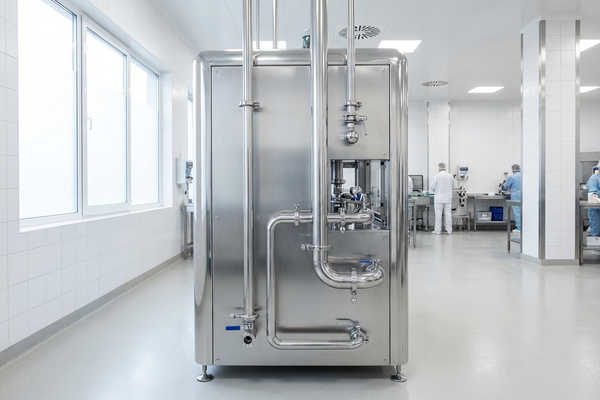
This is non-negotiable, especially for industries where consumer safety is paramount. Terms like "GMP" and "sanitary design" aren't just buzzwords; they are requirements that protect your business and your customers. As a manufacturer, we at RITO take this very seriously, because we know our clients' businesses depend on it.
Key Features for a Compliant Machine
When you're looking at a machine, you need to know what to look for. It’s about the materials, the design, and how easy it is to clean.
- Good Manufacturing Practice (GMP)13: This is a system of standards that ensures products are consistently produced and controlled according to quality standards. For a machine, this means it must be designed to prevent contamination. Surfaces should be smooth, non-porous, and free of cracks or crevices where bacteria can hide.
- Materials Matter: The parts of the machine that touch your product (the "contact parts") should ideally be made from 316L stainless steel10. It has superior corrosion resistance compared to the more common 304 stainless steel, which is crucial for certain acidic products or aggressive cleaning agents.
- Sanitary Fittings: Look for tri-clamp fittings11 instead of threaded ones. Threads are notoriously difficult to clean and can easily trap product and bacteria. Tri-clamp fittings can be taken apart by hand in seconds for thorough cleaning and inspection.
Here is a quick checklist of what to look for:
| Feature | Why It Matters for Compliance & Hygiene |
|---|---|
| 316L Stainless Steel | Resists corrosion from products and cleaning chemicals. Often required for pharma. |
| Tri-Clamp Fittings | Easy to disassemble for quick, thorough cleaning. No threads to trap bacteria. |
| Weld Quality | Welds should be smooth and polished to eliminate crevices where microbes can grow. |
| Clean-in-Place (CIP)12 | Allows you to run a cleaning cycle without disassembling the machine, saving huge amounts of time. |
| Food-Grade Gaskets | Gaskets and seals must be made from compliant materials like Silicone, EPDM, or Viton. |
Building a machine that is easy to clean is just as important as building one that fills accurately. A design that simplifies your cleaning protocol saves you time every single day and gives you peace of mind during an audit.
Why is integration and future scalability14 so important?
You bought a fantastic filling machine, but it can't "talk" to the new capping machine you just got. Now you have a production bottleneck1, and your investment is limiting your growth instead of enabling it.
A good filling machine must integrate with your other equipment, like cappers and labelers, to create a smooth production line. Choosing a modular design15 allows you to add capabilities or increase automation later, protecting your investment as your business grows.
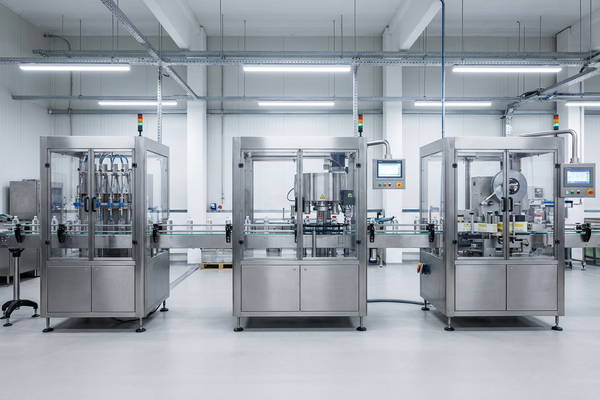
I always tell my clients to buy for where they want to be in three years, not just for where they are today. Your packaging machinery is a long-term investment. Thinking about scalability from day one is one of the smartest things you can do. It prevents you from having to replace a perfectly good machine simply because you've outgrown it.
Building Your Line Like LEGOs
Think of your production line in two ways:
- Monoblock System: This is where the filler, capper, and sometimes labeler are all built into one single machine frame. It's compact and can be very efficient, but it's also rigid. You can't easily change or upgrade one part of it.
- Modular System: This is where each machine (filler, capper, labeler) is a separate station connected by a conveyor. This approach is like building with LEGOs. You can start with just a semi-automatic filler. When you're ready, you can add an automatic capper. Later, you can add a labeler.
At RITO, we specialize in these modular, custom solutions. We know that a startup might only have the budget for a filler right now. We design that filler so that it's ready to be integrated into a full line in the future. It will have the necessary ports and programming to communicate with other machines.
The Path to Automation
A very common growth path we see is:
- Phase 1: Start with a Semi-Automatic Filler. The operator places the bottle, presses a foot pedal to fill, and then manually caps it. This gets the business off the ground with minimal investment.
- Phase 2: Add a Conveyor and Capper. As volume grows, they put their filler on a conveyor. Now bottles move automatically under the fill head. They add an automatic capping machine after the filler. The operator's job shifts to loading empty bottles and overseeing the line.
- Phase 3: Full Automation. Finally, they add a bottle unscrambler at the beginning and a collection table at the end. The line is now almost fully automatic, and the same filling machine they started with is still the heart of their operation.
This phased approach makes growth manageable and affordable. Choosing a partner who understands this and provides lifetime support and upgrade paths is crucial. It ensures your first investment continues to pay dividends for years to come.
Conclusion
Choosing the right filler comes down to your product, volume, and future plans. Focus on these key points to find a machine that serves you well for years.
Identify common causes of bottlenecks and how to avoid them in your filling process. ↩
Explore this link to find the best liquid filling machines tailored to your specific product needs. ↩
Understanding viscosity is crucial for selecting the right filling machine; this resource explains its impact. ↩
Understand the relationship between production volume and the type of filling machine needed. ↩
Discover the precision and control that servo-driven fillers offer for high-value products. ↩
Learn why piston fillers are ideal for thick liquids and how they enhance production efficiency. ↩
Explore the efficiency and speed benefits of fully automatic systems for large-scale production. ↩
Discover how to assess the ROI of your filling machine investment for better decision-making. ↩
Understand the hygiene standards necessary for compliance in food and pharmaceutical industries. ↩
Understand the significance of 316L stainless steel in ensuring hygiene and durability. ↩
Discover how tri-clamp fittings enhance cleaning and maintenance in filling machines. ↩
Learn how CIP technology can save time and ensure hygiene in your production process. ↩
Learn about GMP standards and why they are essential for compliance in manufacturing. ↩
Learn how to choose filling machines that can grow with your business needs. ↩
Explore how modular designs allow for future scalability and flexibility in production. ↩