

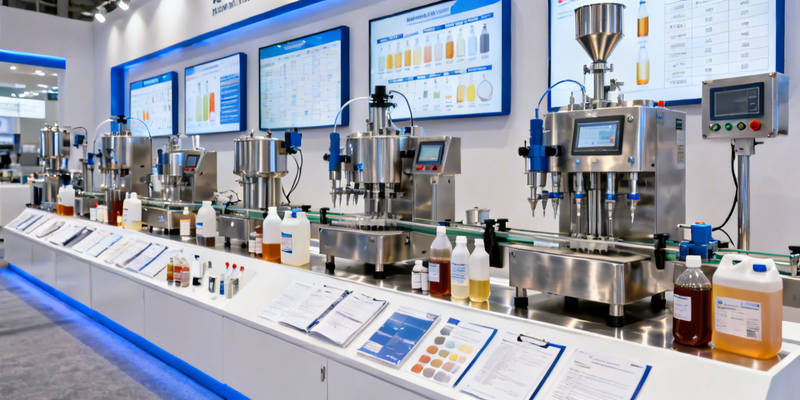
Choosing the right liquid filling machine1 can feel overwhelming. A wrong move can cost you time and money. This guide simplifies the process to help you make the best choice.
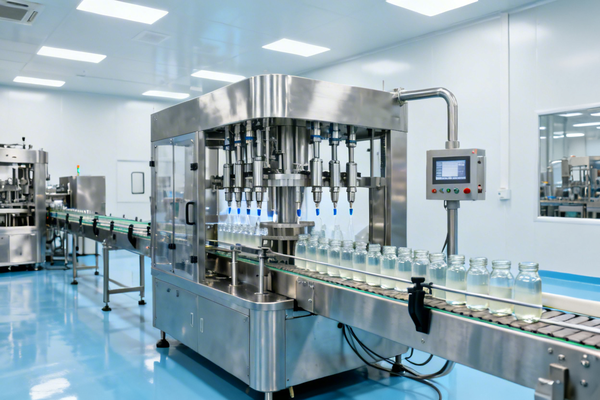
To select a liquid filling machine1, you must first analyze your liquid's properties, your container's specifications, and your production speed2 needs. Then, consider filling accuracy3, how it integrates with other equipment, and the supplier's reliability and technical support4.
Making a big equipment purchase feels like a huge step. I remember when I first started in this industry, the number of options seemed endless. But over the years, I've learned that you can break the process down into simple, manageable questions. By answering these questions one by one, you can find the perfect machine for your needs. This guide is designed to walk you through that exact process, making it feel less like a massive challenge and more like a clear path forward. Let's get started.
How do your liquid's properties affect your machine choice?
Using the wrong machine for your liquid is inefficient. This can lead to messy spills, inaccurate fills, and wasted product, which hurts your bottom line. You must understand your liquid first.
Low-viscosity liquids like water or juice work well with gravity or overflow fillers. Thicker, high-viscosity products like creams or sauces require piston or pump fillers to handle their consistency and ensure an accurate fill.
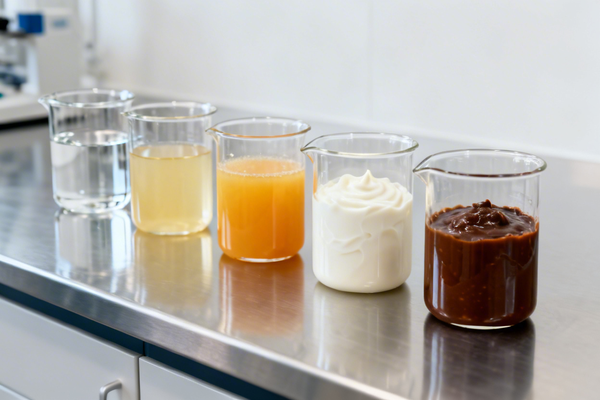
The very first thing we always ask a new client is, "What are you filling?" The answer tells us almost everything we need to know. The "thickness," or viscosity, of your liquid is the most critical factor. Think about the difference between pouring water and pouring honey. They behave very differently, so they need different types of machines to handle them correctly. For thin, watery liquids, a gravity filler5 works great. It's simple and cost-effective. But if you try to use it for a thick cream, it just won't work. That's where a piston filler6 comes in. It uses a piston to push a precise amount of product out, no matter how thick it is.
Matching Fillers to Your Liquid
| Liquid Viscosity | Common Liquid Examples | Recommended Filler Type | Why It Works |
|---|---|---|---|
| Low | Water, Juice, Ink, Tea | Gravity / Overflow | Uses gravity to fill quickly and to a consistent level. |
| Medium | Lotions, Oils, Syrups | Piston / Gear Pump | Offers more force to move slightly thicker liquids. |
| High | Creams, Gels, Pastes, Sauces | Piston / Lobe Pump | Provides positive displacement for thick, heavy products. |
Other factors matter too, like whether your product foams, contains particles (like in a salsa), or is corrosive. Each of these characteristics requires a specific approach, and that's where our experience helps us recommend the perfect solution.
Does your bottle size7 and shape really matter?
Imagine you just bought a brand new machine, but your unique bottles get jammed. Now you're stuck with expensive equipment you can't use, and your entire production line has stopped.
Yes, it's absolutely critical. The machine's conveyor, star wheels, and filling nozzles must be designed to handle your container's specific size, shape (round, square, oval), and material (glass, plastic).
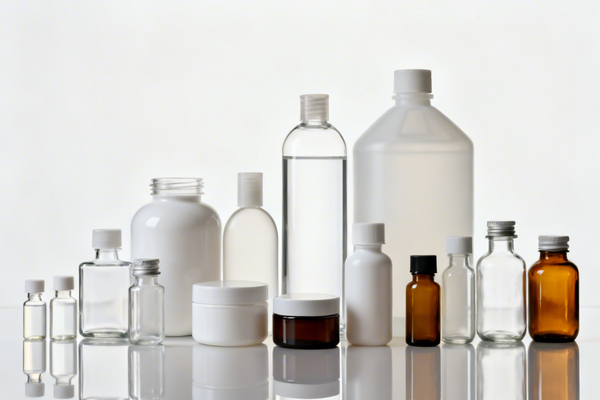
After we know the liquid, the next question is always about the container. A machine set up for standard round bottles will struggle with tall, thin, or square-shaped containers. They can tip over, get stuck, or not align properly under the filling nozzles, causing spills and downtime. This is why we pay so much attention to the details of your packaging. The material matters, too. A delicate glass bottle needs gentler handling than a sturdy plastic jug. We’ve seen it all, from tiny vials for essential oils to large industrial drums. Each one presents a unique challenge that needs a thoughtful solution.
Handling Different Containers
When we encounter a uniquely shaped or unstable bottle, we don't see a problem; we see an opportunity for a custom solution8. For example, if you have a tall, wobbly bottle, we can design a system using "pucks." These are special holders that carry the bottle securely through the entire filling and capping process. For businesses that use multiple bottle size7s, we build machines with adjustable guide rails that can be changed over quickly and easily. For foaming products, we use diving nozzles that go down into the bottle and fill from the bottom up, minimizing foam. It's all about tailoring the machine to fit your product perfectly, not the other way around.
How do you determine your required production speed2?
You're excited about your new machine, but it can't keep up with your customer orders. Now you have backlogs, frustrated customers, and you're losing business to faster competitors.
First, calculate your target output in bottles per minute (BPM) or bottles per hour (BPH). Small-batch operations might be fine with a semi-automatic machine9 (5-20 BPM), but large-scale factories need fully automatic line10s (50+ BPM) for maximum efficiency.
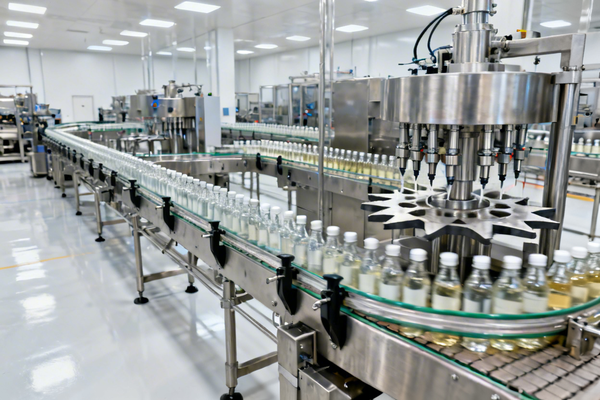
"How fast do you need to go?" This question helps us understand the scale of your business. There's no point in buying a massive, high-speed machine if you're a small startup. Likewise, a large, established factory can't afford the bottleneck of a slow, manual process. We help our clients find the sweet spot. It's not just about your needs today, but also about where you want to be in a year or five years. Sometimes, investing a little more in a faster machine now can save you the headache and expense of a major upgrade down the road. It's a balance between your current budget and your future growth plans.
Matching Machine to Scale
Choosing the right level of automation11 is key. A manual setup is cheap to start but has high labor costs and inconsistent output. A fully automatic line10 is a big investment but offers incredible speed, accuracy, and long-term savings. A semi-automatic machine9 is often the perfect middle ground for growing businesses.
| Machine Type | Speed (Bottles Per Minute) | Initial Investment | Labor Requirement |
|---|---|---|---|
| Manual | 1 - 5 | Low | High |
| Semi-Automatic | 5 - 20 | Medium | Medium |
| Fully Automatic | 20 - 200+ | High | Low |
We've helped companies at every stage. We can provide a simple tabletop filler for a family business making sauces in their kitchen, or we can design a complete, multi-million dollar production line for a global beverage company. Our goal is to provide a solution that fits your scale and grows with you.
Why is integration with other equipment so important?
You bought a new filler, but it doesn't communicate with your capper or labeler. You're left with a clunky, disjointed line that needs constant manual help, defeating the purpose of automation11.
An integrated line ensures a smooth, automated workflow from start to finish. It boosts efficiency, reduces labor costs, and minimizes human error, giving you a seamless and reliable packaging process.
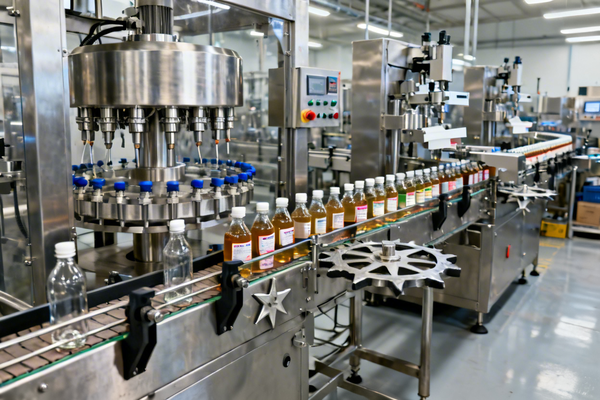
A filling machine is rarely a standalone piece of equipment. It's usually one part of a larger production line. Thinking about the entire line from the beginning is crucial for success. You need all the machines to "talk" to each other. For instance, the filler shouldn't start if the capper downstream is jammed. A bottle unscrambler needs to feed containers at the right speed to match the filler. When all the components work together in harmony, you get a truly efficient and "hands-off" operation. This is where the real power of automation11 is unlocked.
The Complete Production Line
A typical automated packaging line includes several key stages, all working in sequence:
- Bottle Unscrambler: Automatically orients and feeds empty bottles onto the conveyor.
- Filling Machine: Fills the bottles with a precise amount of liquid.
- Capping Machine: Applies and tightens the caps onto the filled bottles.
- Labeling Machine: Applies labels to the bottles.
- Coding/Printing: Adds date codes or batch numbers.
- End-of-Line Packaging: Packs the finished bottles into cases for shipping.
The best way to ensure seamless integration is to source the entire line from a single, experienced supplier. At RITO12, we specialize in providing complete, turnkey solutions. We design the whole line to work as one cohesive system, which simplifies installation, training, and any future support you might need. You have one point of contact for everything.
How do you choose a reliable machine supplier?
You found a cheap machine online, and it broke down within a month. Now the seller is gone, you can't get parts, and your entire production has come to a screeching halt.
Look for a supplier with a strong track record, industry experience, and positive customer testimonials13. A true partner provides quality equipment, customization, installation support14, and responsive after-sales service for long-term success.
This is perhaps the most important question of all. The machine itself is just one part of the equation. The company you buy it from is your partner for the life of that machine. A low price tag can be tempting, but it often comes with hidden costs like poor build quality, no support, and long downtimes. You need a supplier who will be there for you when something goes wrong, who can get you spare parts quickly, and who has the technical expertise to solve your unique challenges. A good supplier invests in your success because your success is also their success.
What to Look for in a Partner
When you choose to work with us at RITO12, you're not just buying a machine; you're gaining a partner. With over a decade of experience and a presence in more than 40 countries, we've built our reputation on reliability and service. Our top R&D team, with over 20 years of experience, can customize solutions for any liquid or container. We provide on-site installation, training for your team, and lifetime technical support4. We understand that downtime costs15 you money, so we ensure quick response times and parts availability. Choosing a supplier is about trust. We work hard every day to earn and maintain that trust with every client we serve, from local startups to global corporations.
Conclusion
Selecting the right machine is simple when you follow these steps. Analyze your product, container, and speed needs. Most importantly, choose a supplier who will be a true partner.
Explore this link to discover top-rated liquid filling machines that suit various production needs. ↩
This resource helps you calculate the ideal production speed for your business needs. ↩
This link explains the significance of filling accuracy in production and how to achieve it. ↩
Explore the essential technical support services that can enhance your machine's performance. ↩
This link explains the functionality of gravity fillers and their ideal applications. ↩
Learn about piston fillers, their operation, and when they are the best choice for your products. ↩
Understanding the impact of bottle size on machine performance is key; this article provides valuable insights. ↩
This resource discusses how custom solutions can address specific filling challenges effectively. ↩
Discover the benefits of semi-automatic machines for growing businesses in this informative resource. ↩
Explore the features and advantages of fully automatic filling lines for large-scale production. ↩
Learn about the advantages of automation in filling processes and how it can boost efficiency. ↩
Explore RITO's expertise in liquid filling solutions, ensuring reliable equipment and exceptional support for your production needs. ↩
Learn how customer testimonials can guide your choice of machine suppliers and ensure quality. ↩
This article outlines the essential installation support services that suppliers should provide. ↩
Understanding the impact of downtime on production costs is crucial; this resource provides insights. ↩