

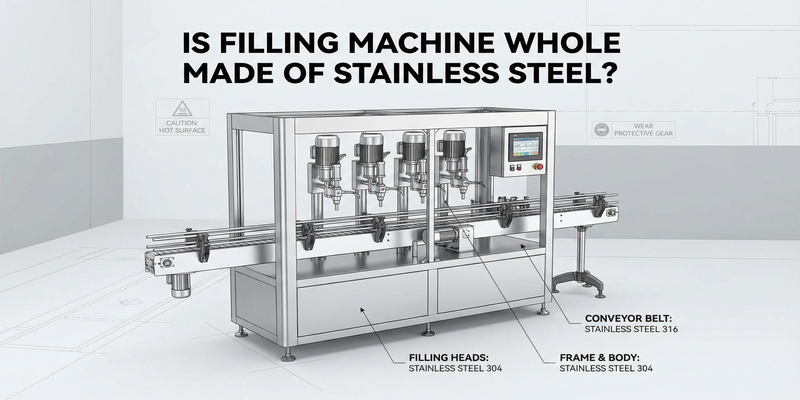
Struggling to find the right filling machine1? You worry if the material will react with your product, causing contamination or damage. The wrong choice can be a very expensive mistake.
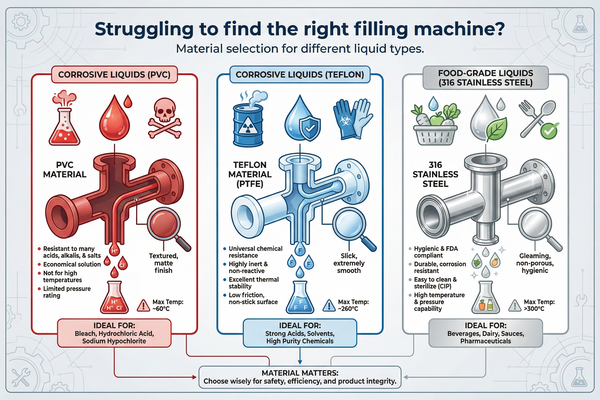
No, a filling machine1 is not always made entirely of stainless steel. The ideal material depends on the liquid you are filling. For corrosive liquids2, materials like PVC3 or Teflon4 are best, while food-grade liquids5 like milk or juice require hygienic 316 stainless steel6 for all contact parts.
Now that you have the short answer, you probably want to know more about the specifics. It's a critical decision that impacts your product's safety, your machine's lifespan, and your budget. With over a decade of experience at RITO7, we've helped hundreds of businesses make the right choice. Let's break down what you need to know so you can choose with confidence.
What Material Should You Use for Corrosive Liquids?
Handling corrosive chemicals is risky. You need a machine that won't break down or leak. A standard machine could fail, causing a dangerous mess and wasting valuable product.
For corrosive liquids2 like acids, bleach, or strong chemicals, you must use anti-corrosion materials8. Options include PVC3, PP, and Teflon4 (PTFE). These materials are specifically designed to resist chemical attacks, ensuring safety and product integrity9.
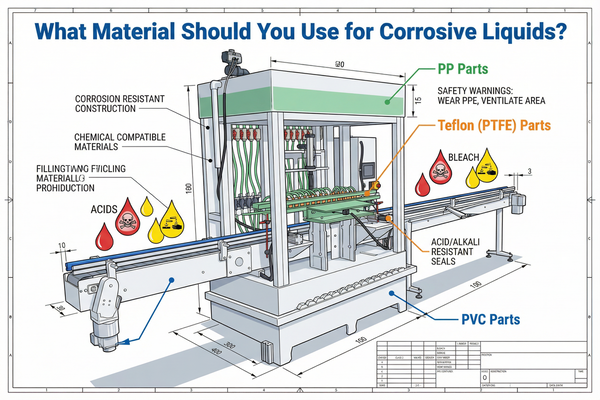
When you're dealing with aggressive chemicals, standard stainless steel just won't do. Even high-grade stainless steel can corrode over time when exposed to certain acids or chlorides. This is where specialized plastics and polymers become essential. They create a non-reactive barrier between your product and the machine. At RITO7, we often build machines for the chemical industry, and choosing the right material is the most important first step. For example, we might use Teflon4 for the nozzles and tubing for its excellent chemical resistance10, but use a more rigid PVC3 for the tank. This customized approach ensures maximum durability and safety.
Here is a simple breakdown of common anti-corrosion materials8:
| Material | Best For | Key Advantage |
|---|---|---|
| PVC3 (Polyvinyl Chloride) | Strong acids, bases, salts | Cost-effective and rigid |
| PP (Polypropylene) | Solvents, acids, bases | Lightweight and good chemical resistance10 |
| Teflon4™ (PTFE) | Highly aggressive chemicals, high temps | Extremely non-reactive, easy to clean |
| Titanium | Certain strong chlorides, like bleach | Extremely durable, but very expensive |
Why Is 316 Stainless Steel Required for Food and Drinks?
Your product's safety is everything. Using the wrong machine material for food or drinks can lead to contamination, health risks, and serious damage to your brand's reputation.
For foods, beverages, and pharmaceuticals, 316 stainless steel6 is the industry standard for all parts that touch the product. Its composition prevents corrosion and bacterial growth, ensuring your product remains pure, safe, and compliant with health regulations.
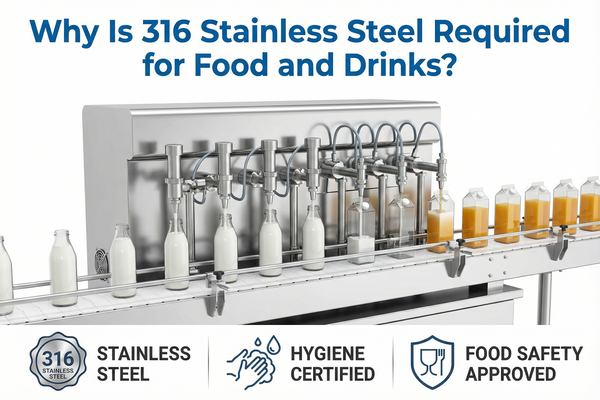
When we talk about "food-grade," we are talking about materials that are safe for contact with things people eat. For machines, this means using materials that won't leach chemicals or harbor bacteria. 316 stainless steel6 is perfect for this. It contains an element called molybdenum, which makes it extra resistant to corrosion from salts and acids commonly found in foods and cleaning agents. A cheaper alternative, 304 stainless steel, is fine for machine frames but not for parts that touch the product. The surface of 316 stainless steel6 is also very smooth and non-porous, which makes it easy to clean and sanitize, helping you meet GMP (Good Manufacturing Practices11) standards. This is a non-negotiable for us when building a machine for a food, beverage, or cosmetic client.
Can You Mix and Match Materials on One Machine?
You have a budget, but you also need a reliable machine. You might wonder if you can save money by using different materials for different parts. Is this a safe or effective strategy?
Yes, you absolutely can, and should, mix and match materials12. A well-designed machine uses premium materials where they matter most—the contact parts—and more economical materials for the frame and external components. This is the best way to balance performance, safety, and cost.
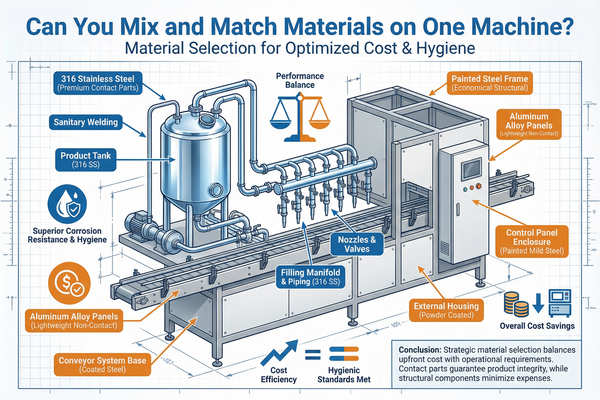
This is where working with an experienced manufacturer really pays off. We call the parts that touch your liquid "contact parts"—these include the hopper, pump, tubing, and filling nozzles. The material for these parts is determined by your product. For the rest of the machine, like the frame or enclosure, we can use more standard materials like 304 stainless steel or even painted carbon steel, depending on your factory environment. For example, if your plant has a high-moisture or washdown environment, a full stainless steel frame is a good investment to prevent rust. But if it's a dry environment, you may not need it. This intelligent customization allows you to get a machine that is perfectly suited to your needs without overpaying for features you don't require.
Here’s how we might approach it:
| Machine Part | Material for Food (e.g., Juice) | Material for Corrosive (e.g., Acid) |
|---|---|---|
| Frame | 304 Stainless Steel | 304 Stainless Steel (or coated) |
| Product Hopper | 316 Stainless Steel | PVC3 or PP |
| Filling Nozzle | 316 Stainless Steel | Teflon4 (PTFE) |
| Tubing | Food-Grade Silicone | Chemical-Resistant Tubing |
Conclusion
The right filling machine1 material depends entirely on your product. Use anti-corrosion plastics for chemicals and sanitary 316 stainless steel6 for food and drinks to ensure safety and machine longevity.
Explore this link to find the best filling machines tailored to your specific liquid needs. ↩
Learn about safe handling practices for corrosive liquids to protect your products and workers. ↩
Explore the benefits of PVC in manufacturing, especially for corrosive applications. ↩
Learn why Teflon is a top choice for chemical resistance and its applications in various industries. ↩
Understand the materials that are safe for food-grade applications to ensure product integrity. ↩
Discover why 316 stainless steel is the industry standard for food safety and compliance. ↩
Explore RITO's expertise in filling machines to ensure you make informed choices for your production needs. ↩
Find out about various anti-corrosion materials that ensure safety and durability in industrial settings. ↩
Learn strategies to maintain product integrity throughout the manufacturing process. ↩
Find out which materials provide the best chemical resistance for your industrial applications. ↩
Explore GMP guidelines to ensure your food production meets safety and quality standards. ↩
Discover the pros and cons of mixing materials in manufacturing for cost-effective solutions. ↩