

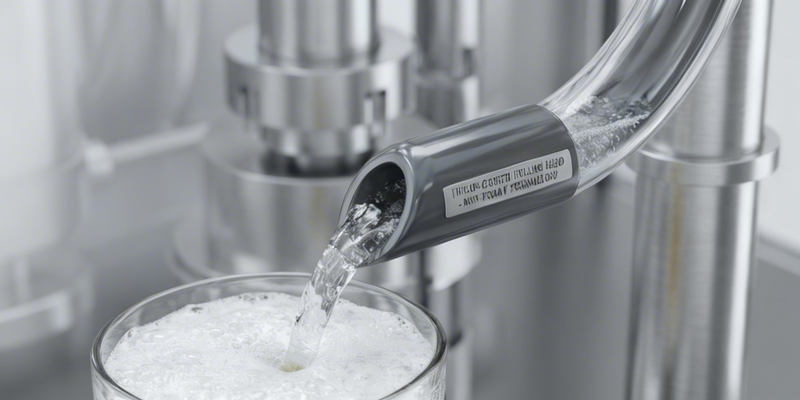
Struggling with messy foam and product waste when filling liquids? This common problem slows down production and costs you money. A corrosion-resistant filling machine is the simple, effective solution.
Corrosion-resistant filling machines1, especially those coated with Teflon2, prevent foam by using smooth, non-stick surfaces to reduce turbulence3. They also use precision filling valves4 for controlled flow and resist harsh chemicals, ensuring stable, foam-free performance over time.
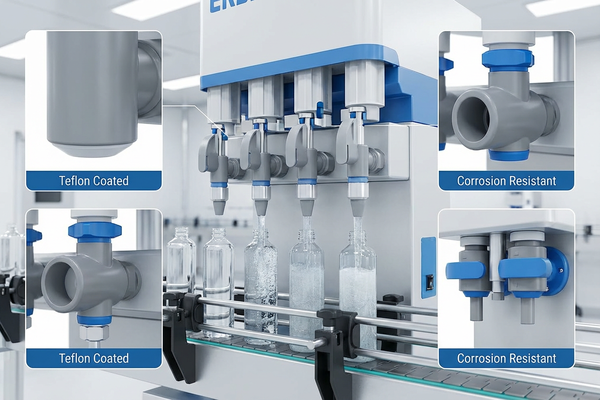 2-Coated Filling Machine" />
I've seen firsthand how frustrating foam can be. It seems like a small issue, but it quickly turns into a big headache for any production line. We've spent years at RITO5 perfecting our machines to handle exactly these kinds of challenges. But how do these features actually work? Let's break it down and look at the details. It’s simpler than you might think, and understanding it will change how you view your filling process6.
Why Does a Smooth Teflon2 Surface Reduce Foaming?
Does your filling process6 create too much turbulence3 and unwanted foam? This happens when liquid moves too quickly over rough surfaces. A machine with a smooth, Teflon2n-coated surface solves this.
A smooth Teflon surface7 surface has very low friction. This non-stick quality allows liquid to flow gently and evenly without agitation. By minimizing turbulence3, it prevents air from getting trapped in the liquid, which is the primary cause of foam formation during the filling process6.
Let's dive deeper into why surface texture matters so much. Foaming is a physical reaction. It happens when a liquid's surface tension is agitated, trapping gas bubbles. Think about pouring a soda quickly into a glass; the rough, fast pour creates foam. The same principle applies inside a filling machine. Standard stainless steel surfaces, while smooth to the touch, have microscopic imperfections. These tiny peaks and valleys create friction and tiny whirlpools, known as turbulence)3, as the liquid flows past. This turbulence3 is what whips air into the product. Teflon2, on the other hand, is one of the most non-stick materials known. Its incredibly low coefficient of friction means liquids glide over it with minimal resistance. This creates a laminar, or smooth, flow. A laminar flow)8 is crucial because it keeps the liquid stable and prevents air from being mixed in. It's the same reason a non-stick pan works so well; food doesn't have anything to grab onto. This is a big reason why we choose this coating for machines handling detergents, soaps, and carbonated drinks, as it ensures a gentle journey from the tank to the bottle.
| Material Surface | Friction Level | Turbulence Potential | Foam Result |
|---|---|---|---|
| Standard Steel | Medium | High | High |
| Polished Steel | Low | Medium | Medium |
| Teflon2-Coated | Very Low | Very Low | Minimal |
How Do Precision Filling Valves Control Foam Formation?
Are sudden splashes from your filling machine causing foam and inaccurate fills? This common issue leads directly to product waste and inconsistent quality. Precision filling valves offer the control you need.
Precision filling valves control the liquid's speed and pressure very accurately. They can start the fill slowly, ramp up to full speed, and then slow down again before stopping. This prevents the sudden splashing that whips air into the liquid and creates foam.
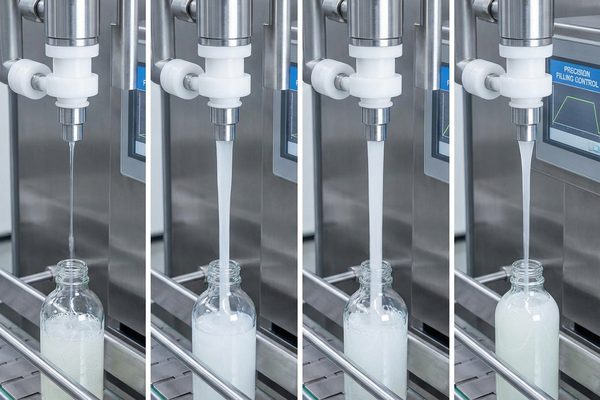
Control is everything when it comes to foaming liquids9. A simple on/off valve, like a ball valve, is a recipe for disaster. It dumps the liquid into the container, causing a splash that guarantees foam. This is where our advanced, precision valves make a huge difference. They are often servo-driven and controlled by a PLC (Programmable Logic Controller10), allowing us to program a specific filling profile for each unique product. A very effective technique is "bottom-up" filling. The nozzle is lowered to the bottom of the container and slowly retracts as the liquid level rises, always filling from below the surface. This technique almost completely eliminates splashing and surface agitation. Furthermore, the valve can precisely adjust the flow rate during the cycle. It starts gently, accelerates for the main fill, and then tapers off at the end for a perfect top-off. This multi-stage process ensures a fast yet gentle fill. This level of control not only stops foam but also dramatically improves fill accuracy, reducing product giveaway and saving you money.
| Filling Stage | Flow Rate | Nozzle Position | Foam Risk |
|---|---|---|---|
| 1. Initial Fill | Slow | At container bottom | Low |
| 2. Main Fill | Fast | Rises with liquid | Low |
| 3. Final Top-Off | Slow | Near container top | Minimal |
| Overall Result | Fast & Gentle | Optimized | Very Low |
What Makes Corrosion Resistance So Important for Stable Performance?
Are you worried that acidic or caustic liquids are damaging your equipment? This corrosion degrades machine parts, causing turbulence3 and costly downtime. A fully corrosion-resistant machine ensures long-term, stable performance.
Corrosion resistance is vital because many foaming liquids9 are acidic or alkaline. These chemicals can eat away at metal surfaces, creating pits and roughness. This damage increases friction and turbulence3, which leads to more foam. A protective Teflon2 coating prevents this damage.
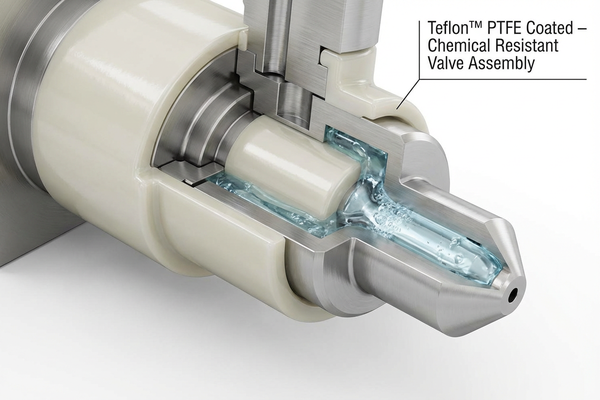
When we talk about performance, we're not just talking about day one. We're talking about consistent, reliable operation for years. This is where corrosion resistance)11 becomes non-negotiable. Many products, like detergents, cleaning agents, or even some acidic food products, are chemically aggressive. Over time, they can corrode standard stainless steel. Once corrosion starts, the machine's internal surfaces are no longer smooth. This pitting and roughening act just like a poorly finished surface, creating turbulence)3 and foam. It's a problem that gets worse over time. A Teflon2 coating is chemically inert, meaning it doesn't react with most acids or bases. This protects the underlying metal, ensuring the filling path remains perfectly smooth. But the benefits go further. Corrosion can also damage critical components like seals and gaskets, leading to leaks and costly downtime. More importantly, it maintains product purity12. You never want microscopic metal particles flaking off into your cosmetic cream or beverage. A protected surface ensures your product remains uncontaminated, which is essential for meeting safety standards.
| Liquid Type | Corrosive Potential | Impact on Unprotected Metal | Impact on Teflon2-Coated Metal |
|---|---|---|---|
| Bleach/Cleaners | High | Pitting, surface damage, increased foam | No effect, smooth surface remains |
| Acidic Juices | Medium | Gradual etching, risk of contamination | No effect, product purity12 is safe |
| Alkaline Soaps | Medium | Surface degradation, potential leaks | No effect, long-term stability |
Conclusion
In summary, a corrosion-resistant machine with Teflon2 surfaces and precision valves provides a complete solution. It delivers a smooth, controlled, and stable filling process6 for any foaming liquid.
Explore how these machines can enhance production efficiency and reduce costs. ↩
Explore how Teflon coatings enhance performance and durability in various industries, ensuring efficiency and longevity. ↩
Gain insights into how turbulence affects foam formation and filling efficiency. ↩
Discover how precision filling valves can improve fill accuracy and reduce product waste. ↩
Explore RITO's innovative solutions for filling machines to understand how they tackle common production challenges effectively. ↩
Discover effective strategies to enhance efficiency and reduce waste in filling operations. ↩
Understand the role of surface smoothness in preventing foam and ensuring product quality. ↩
Explore the significance of laminar flow in achieving stable and foam-free filling. ↩
Gain insights into the challenges posed by foaming liquids and their solutions. ↩
Understand the role of PLCs in automating and optimizing filling processes. ↩
Learn how corrosion resistance impacts machine longevity and product integrity. ↩
Learn about the importance of preventing contamination in sensitive products. ↩