

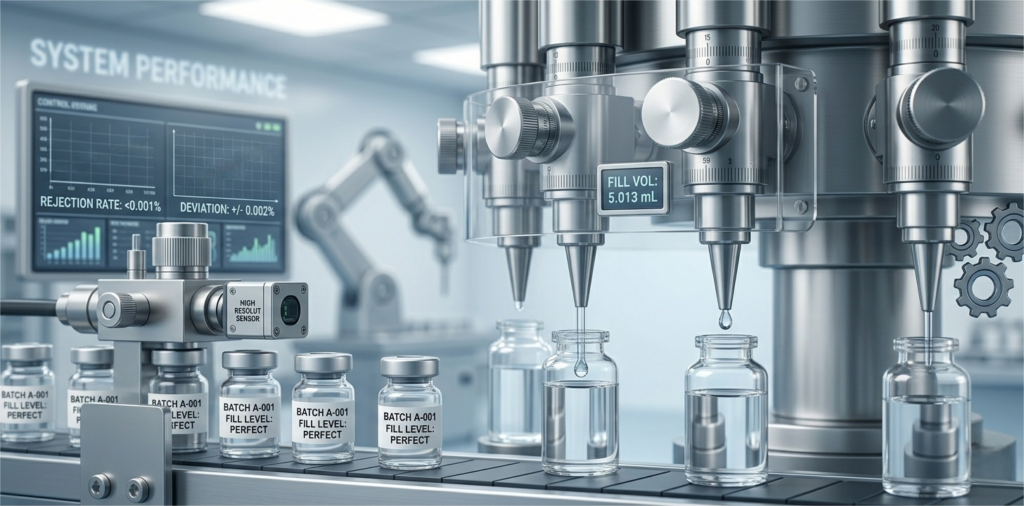
Are you losing product and profit from inaccurate fills? This inconsistency hurts your bottom line and brand image. Understanding what determines filling accuracy1 is the first step to fixing it.
The accuracy of a liquid filling machine typically ranges from ±0.5% to ±1% for standard models. For high-precision needs2 like pharmaceuticals, advanced systems can achieve an impressive ±0.1% accuracy. However, this depends on the liquid's properties, the filling technology3, and machine quality.
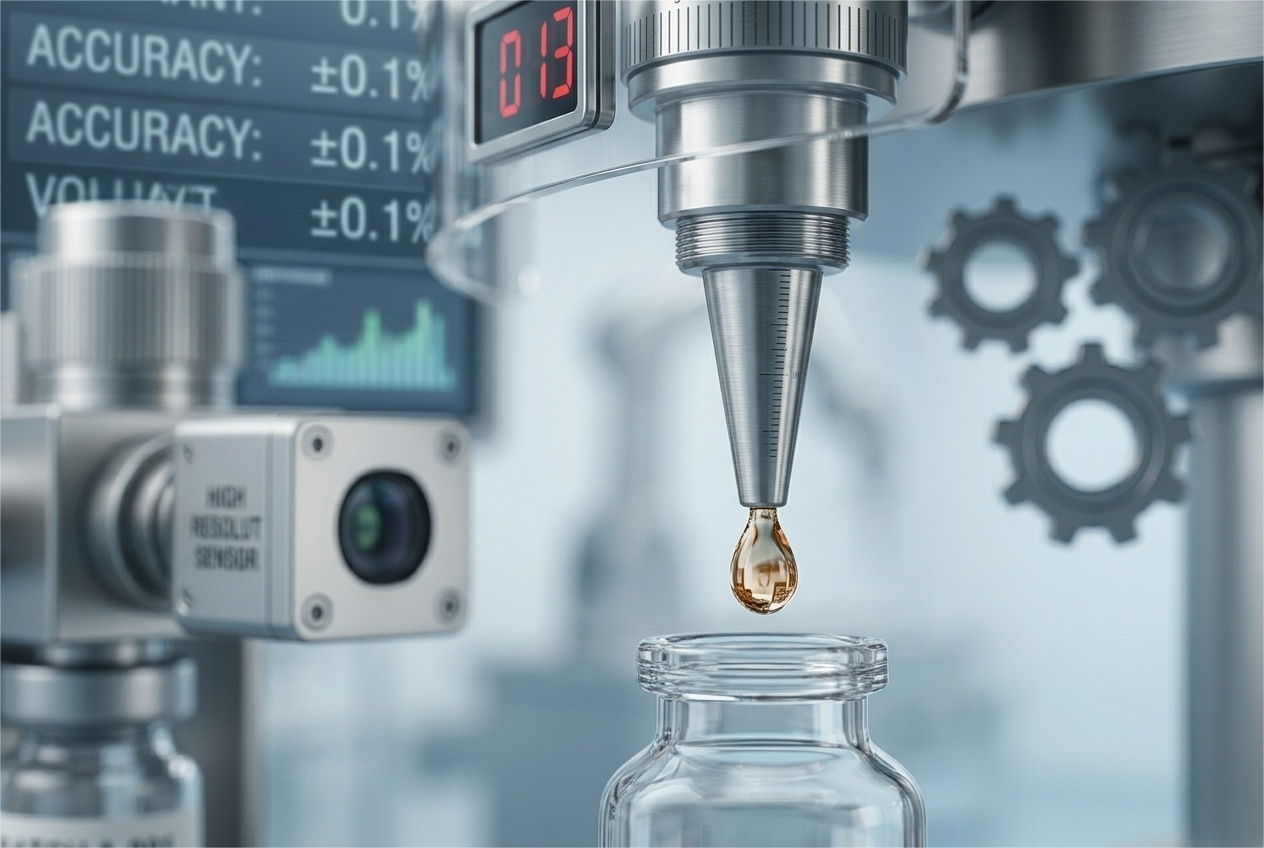
Now that you have a baseline understanding, you might be wondering what specific factors cause this range in accuracy. It’s not just about the machine itself; it's about how the machine interacts with your product and your production goals4. Let's dive deeper into the variables that you need to control to get the perfect fill every single time.
How Do Liquid Properties Affect Filling Accuracy?
Ever noticed your filling machine works perfectly with one liquid but is all over the place with another? This unpredictability can ruin your production schedule5. Let's look at why the liquid itself is key.
A liquid's viscosity6, tendency to foam, and temperature directly impact filling accuracy1. Thicker liquids need more force, foamy liquids require special nozzles to prevent air pockets, and temperature shifts can alter liquid volume, all affecting the final filled amount.
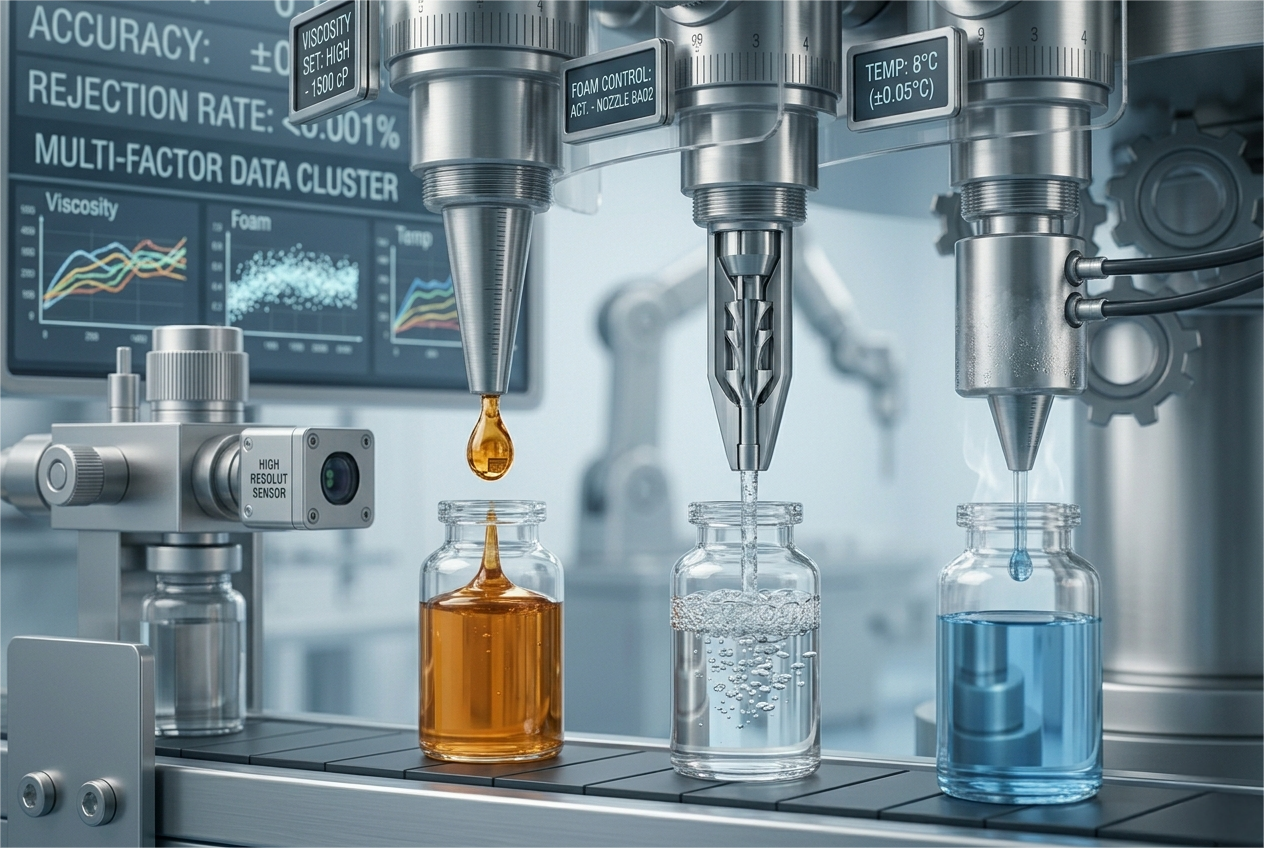
The properties of your product are the first thing we look at when designing a solution. You can't just use any filler for any liquid and expect great results. It's a science, and understanding these three factors is crucial for consistency.
Viscosity Matters
Viscosity is just a simple way of saying how thick a liquid is. Water has low viscosity6, while honey has high viscosity6. A machine designed for water will struggle to push thick honey through its system accurately. Piston filling machines are often our go-to for viscous products because they use a strong, positive displacement action to move a precise volume, ensuring accuracy no matter how thick the liquid is.
The Problem with Foam
Foaming is a huge issue for products like soaps or carbonated drinks. If a liquid creates foam as it's filled, the foam can take up space in the container. Once it settles, the actual liquid level is much lower than it should be. We solve this by using special filling nozzles that dispense the product from the bottom of the container upwards, minimizing turbulence7 and preventing foam from forming in the first place.
Temperature Changes Everything
Many people forget that a liquid's volume changes with temperature. It expands when it's hot and shrinks when it's cold. If your production environment has temperature swings, a volume-based filler might give inconsistent results. In these cases, we often recommend a net weight filler, which we'll discuss next.
| Liquid Property | Challenge for Accuracy | Common Solution |
|---|---|---|
| High Viscosity | Difficult to pump consistently | Piston Fillers / Positive Displacement Pumps |
| Foaming | Creates air pockets, leading to under-fills | Bottom-up filling nozzles / Slower fill speed |
| Temperature Fluctuation | Causes liquid volume to change | Temperature control / Net Weight Filling Systems |
Which Filling Technology Gives The Best Accuracy?
Choosing a new filling machine can feel overwhelming with all the options out there. If you pick the wrong technology, you could be stuck with an inaccurate and inefficient process for years.
Piston fillers excel with viscous liquids, flow meter fillers8 are versatile and highly accurate for a range of products, and net weight fillers9 offer the best precision by measuring mass, which isn't affected by temperature or foam.
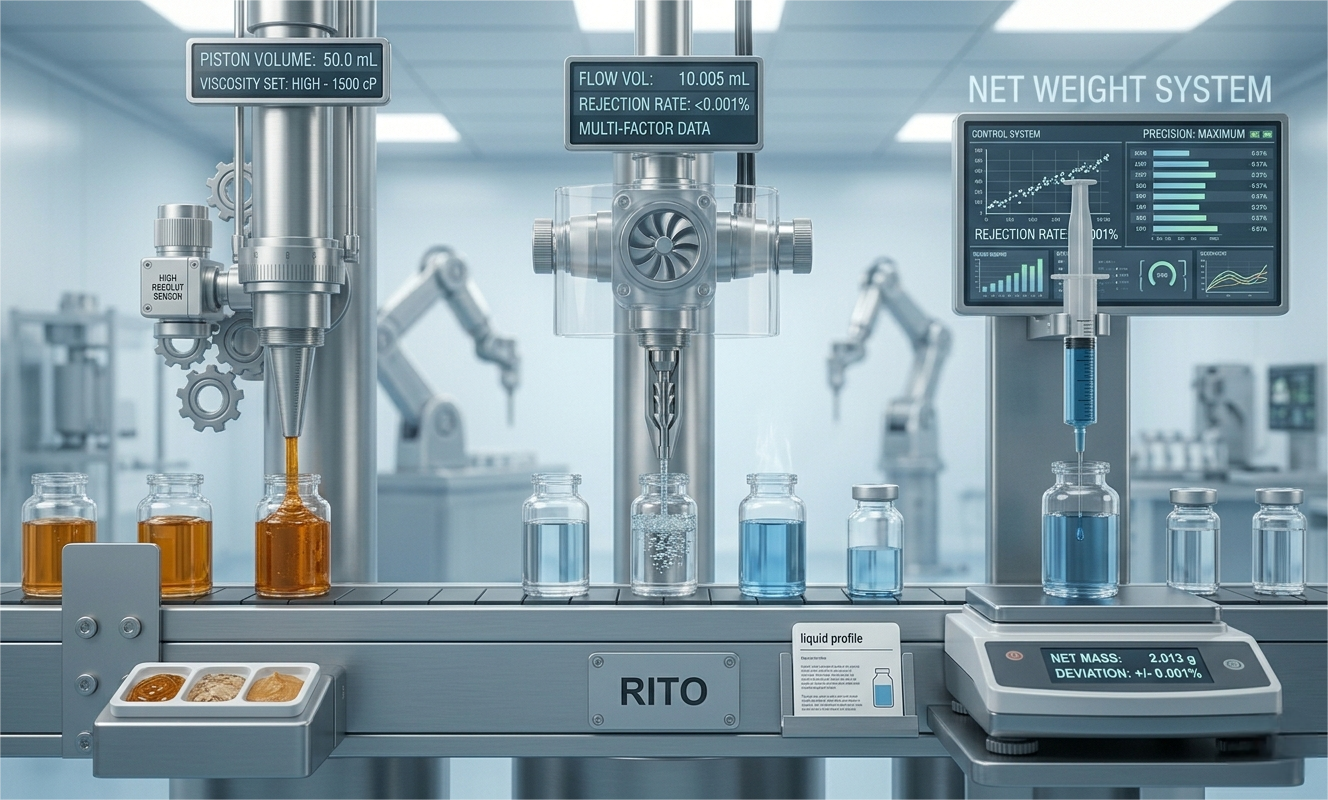
At RITO10, we don't believe in a one-size-fits-all solution. The right technology for you depends entirely on your product and your goals. Let's break down the most common types so you can see how they compare.
Piston Fillers: The Powerful Workhorse
A piston filler works like a syringe. A piston pulls back to draw a specific volume of liquid into a cylinder, then pushes it out into your container. This method is simple, reliable, and fantastic for thick products like creams, pastes, and gels. Its accuracy is generally very good, typically in the ±0.5% to ±1% range.
Flow Meter Fillers: The Versatile Choice
Flow meter fillers use a sensor to measure the amount of liquid that passes through it. When the target volume is reached, a valve shuts off. This technology is incredibly versatile and can handle a wide range of viscosities, from thin juices to medium-thick sauces. They are also easy to clean, which is a big plus. Accuracy for these systems is often a step up, around ±0.2% to ±0.5%.
Net Weight Fillers: The Ultimate in Precision
For products where every gram counts, like expensive chemicals or pharmaceuticals, a net weight filler is the best choice. Instead of measuring volume, it measures weight. The machine places the empty container on a scale, tares the weight, and fills until the target weight is reached. This method completely bypasses issues with temperature, foaming11, or inconsistent product density, delivering the highest accuracy, often at ±0.1% to ±0.2%.
| Filling Technology | Best For | Typical Accuracy | Key Advantage |
|---|---|---|---|
| Piston Filler | Viscous liquids (creams, pastes) | ±0.5% to ±1% | Powerful and reliable for thick products |
| Flow Meter Filler | Wide range of liquid viscosities | ±0.2% to ±0.5% | Versatile and easy to clean |
| Net Weight Filler | High-value or inconsistent products | ±0.1% to ±0.2% | Unaffected by foam or temperature |
Does Machine Speed And Quality Affect Precision?
You need to increase your production speed, but every time you do, your fill accuracy suffers. This forces you into a terrible choice between speed and quality. But you don't have to choose.
Yes, both speed and machine build quality12 are critical. Pushing a machine beyond its designed speed will reduce accuracy. However, a well-built machine with high-quality components, servo motors13, and a stable control system maintains precision even at higher speeds.
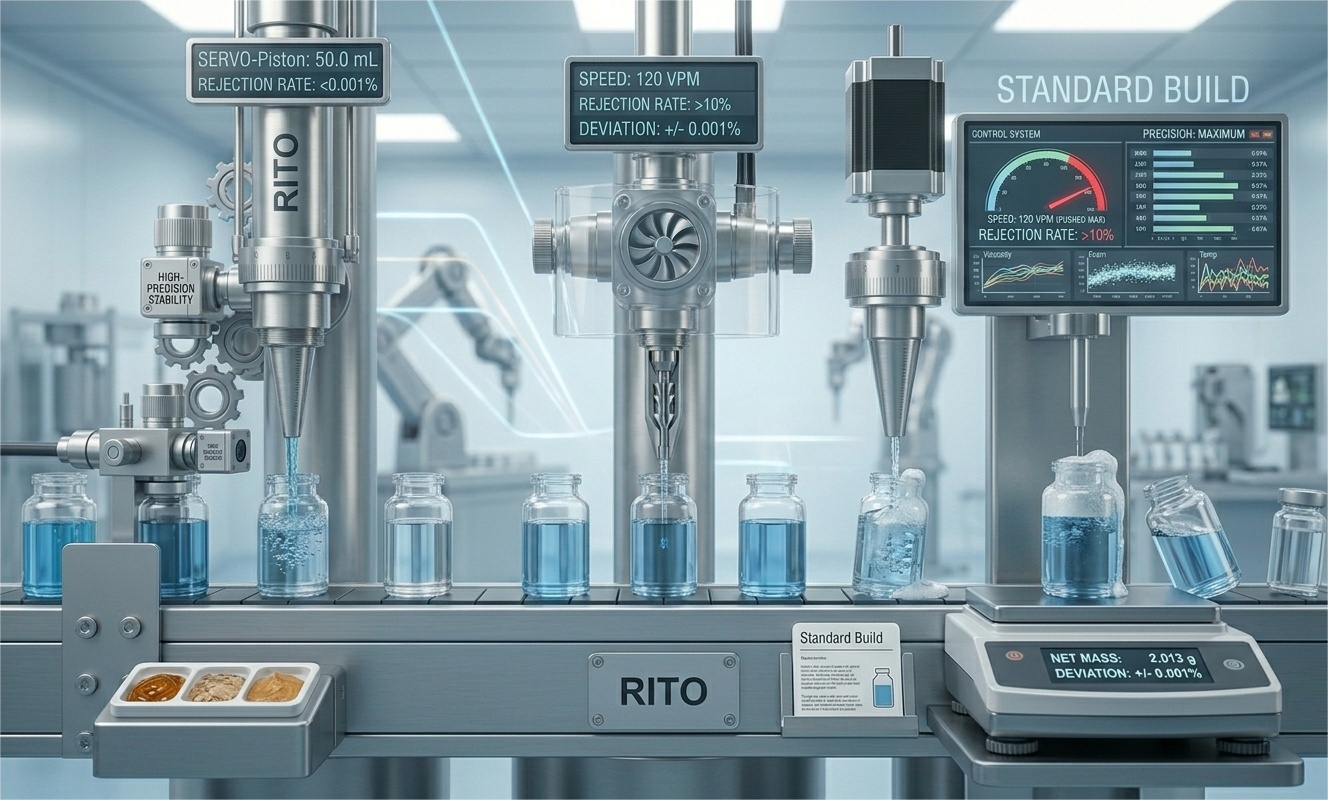
When customers ask us for a faster machine, the first thing we discuss is build quality12. You can't just turn up the dial and hope for the best. True speed comes from engineering that is designed for both speed and precision from the ground up.
The Speed vs. Accuracy Trade-off
Why does accuracy often drop at high speeds? Faster filling creates more turbulence7, which can lead to splashing and foaming11. There's also less time for mechanical parts to complete their cycle precisely. A cheaply made machine will vibrate more at high speeds, throwing off sensitive measurements. This is why a robust, heavy-duty frame is the foundation of every machine we build at RITO10. It provides the stability needed for precision.
High-Quality Components Are Not Optional
The parts inside the machine make all the difference. We use servo motors13 instead of standard motors because they provide exact control over speed, acceleration, and position. This allows us to create a "filling profile14" that might start fast, then slow down at the end to top off the container precisely without splashing. The PLC (the machine's brain) we use is also top-of-the-line, capable of making split-second adjustments to keep everything running perfectly.
The Importance of Calibration
Even the best machine in the world will lose its accuracy if it's not maintained. Regular calibration15 is essential. This means testing the machine's output and making small adjustments to ensure it is still hitting the target fill volume or weight. We design our machines to make this process as simple and quick as possible, so it doesn't cause major downtime in your production. Ultimately, investing in a quality machine from a manufacturer like us, who focuses on R&D and uses premium components, means you won't have to compromise between getting your product out the door and getting it right.
Conclusion
A machine's accuracy isn't one number. It's a result of your liquid, the filling technology3, and the machine's quality. Choosing the right partner ensures you get the precision you need.
Understanding filling accuracy is crucial for optimizing production and minimizing losses. ↩
Discover the requirements for high-precision filling in sensitive industries. ↩
Get insights into various filling technologies and their applications. ↩
Explore how aligning filling technology with production goals ensures efficiency. ↩
Understand the relationship between filling accuracy and production efficiency. ↩
Learn about viscosity's role in filling accuracy and how to manage it effectively. ↩
Learn about the effects of turbulence on filling processes and how to mitigate it. ↩
Explore the versatility and accuracy of flow meter fillers for various liquids. ↩
Learn how net weight fillers provide precision by measuring weight instead of volume. ↩
Explore RITO's innovative solutions for liquid filling accuracy, ensuring optimal performance and quality in your production process. ↩
Discover solutions to prevent foaming and ensure accurate fills. ↩
Discover how high-quality components enhance precision in filling machines. ↩
Learn how servo motors improve control and accuracy in filling operations. ↩
Explore how a filling profile optimizes the filling process for accuracy. ↩
Understand the importance of calibration in maintaining filling accuracy. ↩