

Your production line needs to be flexible. But a fixed-speed filler limits your options. What if you could easily adjust the speed to match any product or container?
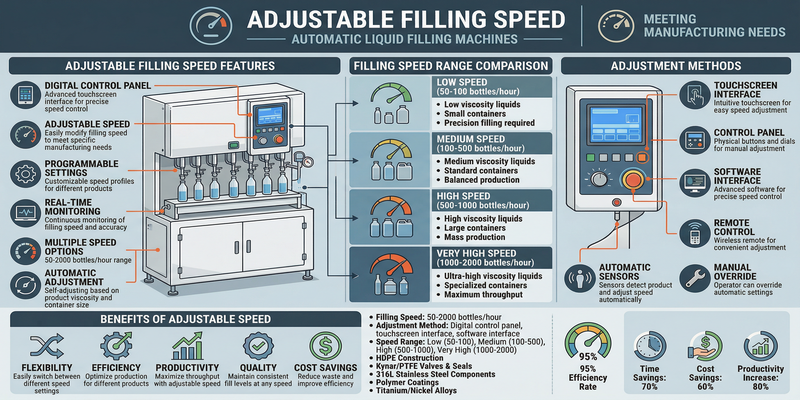
Yes, you can absolutely modify the filling speed. Modern automatic liquid filling machines1, like our RITO2 models, come with a built-in speed range. You can easily adjust the speed from a minimum to a maximum setting directly through a user-friendly touch screen interface.
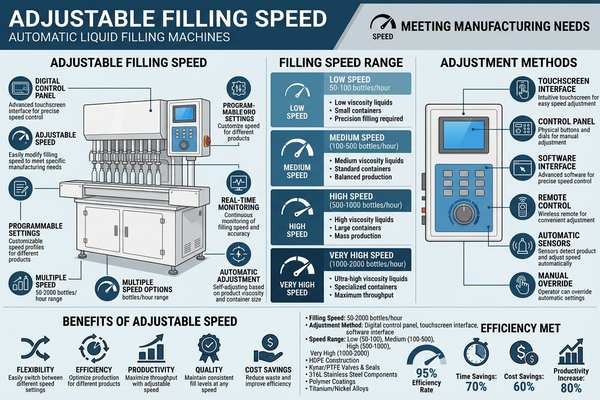
It's great to know that speed adjustment is possible. It's a feature I get asked about all the time by our partners and clients. But just knowing you can change the speed isn't enough. You need to understand how it works and why it's so important for different products. Let's dive into the details and see how this feature can transform your production efficiency3.
How do you actually adjust the filling speed on the machine?
Adjusting industrial machinery sounds complicated and intimidating. You don't want to mess up the settings. But what if the process was intuitive and required no special technical skills?
Most modern filling machines use a Human-Machine Interface (HMI)4, which is usually a touch screen. On our RITO2 machines, you simply navigate to the speed control menu on the screen and use plus/minus buttons or a slider to set your desired speed within the machine's predefined range.
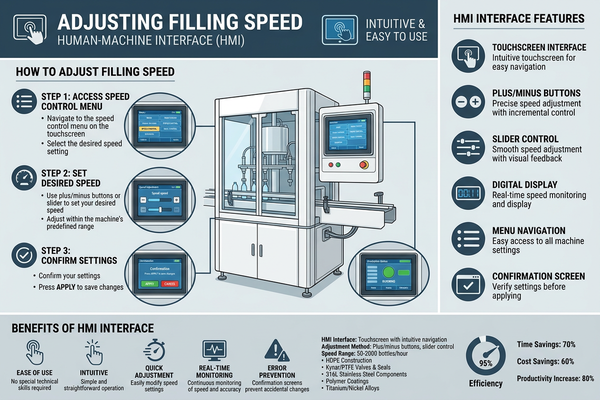
I remember the first time I helped a client set up their new machine. They were worried it would be a complex process needing an engineer. I showed them the HMI, which looked and felt just like a tablet. We went to the "Operation Parameters" menu. Right there was a "Filling Speed" setting. It clearly displayed the current speed in Bottles Per Minute (BPM)5 and the machine's operating range, for example, 20-100 BPM. The adjustment was as simple as tapping '+' and '-' buttons. It’s incredibly intuitive. The best part, however, is the ability to save these settings as "recipes." You can create a profile for each of your products.
Saving Production Recipes
This feature is a huge time-saver. You can program and save the ideal settings for every product you run.
| Recipe Name | Product Type | Viscosity | Recommended Speed |
|---|---|---|---|
| Water_500ml | Drinking Water | Low | 95% (High) |
| Shampoo_300ml | Shampoo | Medium | 70% (Medium) |
| Honey_Jar | Honey | High | 35% (Low) |
| Cleaner_1L | Foamy Liquid | Low (Foaming) | 40% (Low-Medium) |
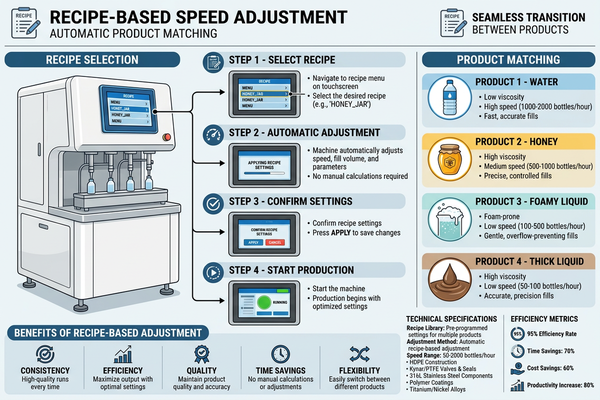
When you switch from filling water to filling honey, you just select the "Honey_Jar" recipe from the screen. The machine instantly adjusts the speed, fill volume6, and other parameters automatically. This eliminates guesswork and ensures a consistent, high-quality run every single time.
Why would you need to change the filling speed?
You want to maximize your output. So you might think running the filler at top speed is always best. But this can lead to inaccurate fills, spills, and damaged products.
You need to change the filling speed to match the product's characteristics and the container type7. For example, thick liquids require a slower speed for accuracy, while foamy products need a gentle fill to prevent overflow. Adjusting speed ensures product quality and production efficiency3.
The need for speed adjustment comes down to one word: control. Every product is different, and treating them all the same is a recipe for disaster. I've seen it happen. A client tried to fill a thick, creamy lotion at the same high speed they used for water. The result was a huge mess, with inaccurate fills and product splashing everywhere. We slowed the machine down by 40%, and the problem vanished. The fills were perfect, and there was zero waste. This is why variable speed is not just a feature; it's fundamental to a flexible packaging line. It all comes down to a few key factors.
Key Factors Influencing Speed
- Product Viscosity: This is the most common reason. Thin liquids like water or juice can be filled very quickly. Thick, viscous products like honey, gels, or heavy creams need to be filled more slowly. A slower speed allows the product to settle properly in the container and ensures the piston or pump can dispense an accurate volume without immense pressure.
- Foaming Tendencies: Many products, like soaps, detergents, and some beverages, will foam up if they are agitated. Filling these at high speed creates a container full of foam instead of liquid, leading to massive underfills once the foam settles. For these, we often recommend a two-stage fill available on our RITO2 machines: a fast initial fill to 80%, followed by a slow top-off to let the foam subside and get an accurate final volume.
- Container Type: The container itself matters. A bottle with a very narrow neck cannot handle a fast, splashing fill. The liquid will just bounce out. An unstable or lightweight plastic bottle might tip over on the conveyor if the line is moving too fast. Adjusting the filling speed helps synchronize the entire line for smooth, stable operation.
Are there any limits or trade-offs when adjusting the filling speed?
You've got an adjustable speed8 filler and want to crank it to the max for high output. But is faster always better? There might be hidden costs to pushing the limits.
Yes, there are trade-offs. The primary trade-off is between speed and accuracy. Pushing the speed too high, especially with viscous or foamy liquids, can lead to inaccurate fills and spills. Every machine also has a mechanical maximum speed limit for safe and reliable operation.
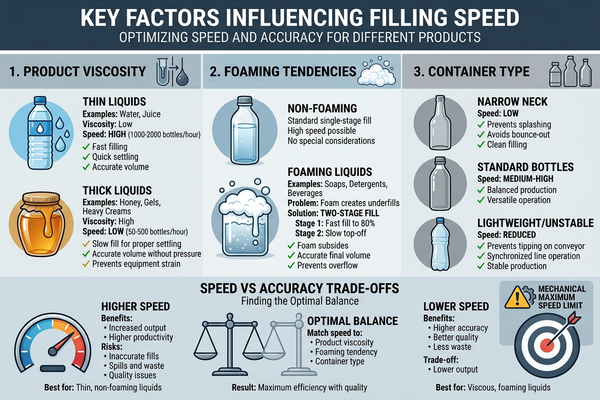
Absolutely, there's always a balance to be struck. In manufacturing, it's rarely about one single metric. You have to consider the whole picture. The main relationship to manage is the one between speed and accuracy. As you increase the speed, your output in bottles per minute goes up, which looks great on paper. However, after a certain point, accuracy begins to suffer. The filling nozzle might not have enough time to close precisely, causing drips and overfills. Or the force of the fill might cause splashing, leading to underfills. Our job at RITO2 is to help clients find the "sweet spot"—the optimal speed that delivers high throughput while staying well within their quality control tolerances9.
Finding the Right Balance
Beyond accuracy, there’s also the health of the machine itself. Running any equipment at 100% of its rated capacity 24/7 will cause accelerated wear and tear on motors, seals, and other moving parts. By operating at 85-90% of the maximum speed, you can significantly extend the machine's lifespan and reduce unplanned downtime for maintenance. It’s about finding a sustainable pace10.
| Speed Setting | Output (BPM) | Fill Accuracy | Machine Stress | Best For |
|---|---|---|---|---|
| Low (25-40%) | Low | Very High | Low | High-viscosity, foamy, or very delicate products. |
| Medium (60-80%) | Medium-High | High | Medium | The "sweet spot" for most general-purpose liquids. |
| High (85-100%) | Maximum | Good to Fair | High | Thin, non-foamy liquids where maximum output is the top priority. |
Ultimately, having control over the filling speed gives you the power to decide what matters most for each job: hitting a production quota11, achieving near-perfect fill accuracy, or prioritizing the long-term reliability of your equipment.
Conclusion
In short, adjustable speed8 is a standard and essential feature. It gives you the flexibility to handle any product, ensuring both efficiency and quality in your production line.
Discover cutting-edge technologies that improve filling accuracy and speed. ↩
Explore this link to discover how RITO machines enhance production efficiency with adjustable speed and user-friendly interfaces. ↩
Explore effective methods to enhance efficiency in your production line. ↩
Learn how HMI technology simplifies machine control and enhances user experience. ↩
Understand how BPM affects production efficiency and planning. ↩
Understand the factors that influence fill volume for accurate dispensing. ↩
Discover how different container designs impact filling processes. ↩
Explore how adjustable speed can enhance production efficiency and product quality. ↩
Learn about the standards that ensure product quality in manufacturing. ↩
Learn why maintaining a sustainable pace is crucial for long-term success. ↩
Discover how flexibility in speed can help achieve production goals. ↩