

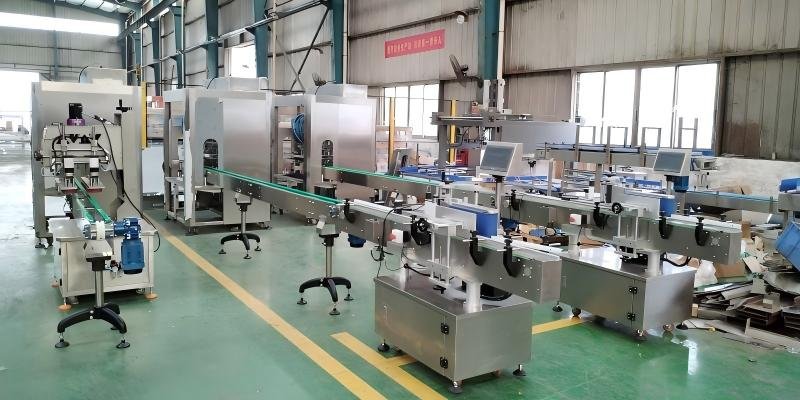
Your production line1 is diverse, but your filling machine2 has one fixed speed. This bottleneck3 causes frustration and inefficiency, slowing down your entire operation. Is this inflexibility hurting your bottom line?
Yes, the filling speed of an automatic liquid filling machine2 can be adjusted. Modern machines, like ours at RITOPACK, often feature a user-friendly touch screen. This allows you to easily set the exact filling amount and speed to match your specific production requirements and liquid characteristics4.
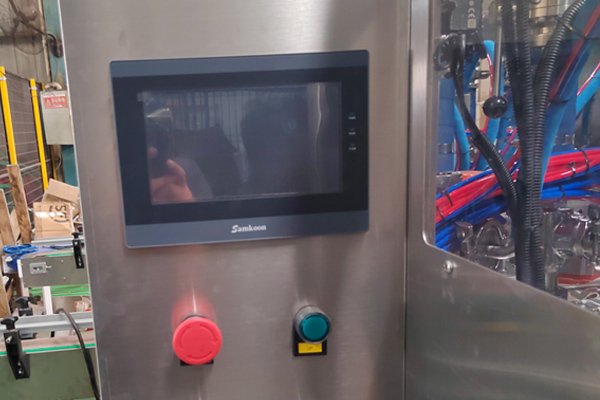
We have established that you can change the speed on these machines. This is a big deal for manufacturers. It's a feature that directly impacts your daily output, product quality, and even your profit margins. But knowing you can change the speed is just the beginning. The real value comes from understanding how and why you should adjust it. Let's explore how this simple feature can completely change your production line1 and why it is so important for modern manufacturing.
How does adjusting filling speed5 improve production efficiency6?
Slow changeovers between products are killing your uptime. Every minute spent manually recalibrating a machine is a minute you are not making money. Are you tired of this constant inefficiency?
Adjusting filling speed directly boosts efficiency by matching the machine's pace to the product's characteristics and the line's overall speed. This reduces downtime between different product runs and minimizes waste from overfills or spills, ensuring a smoother, faster, and more profitable manufacturing process7.
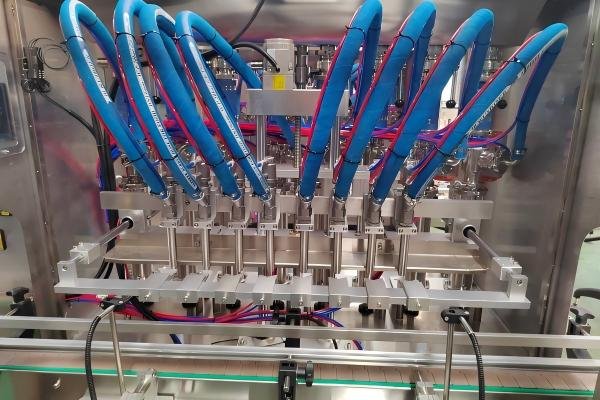
When I talk to clients, one of their biggest goals is to maximize output without sacrificing quality. Adjusting the filling speed is a core strategy to achieve this. It's not just about running the machine as fast as possible. It's about running it at the optimal speed for each specific task. This smart approach to speed is what separates good operations from great ones.
Optimizing for Liquid Viscosity
The type of liquid you're filling is the most important factor. Thin liquids like water or juice can be filled very quickly. They flow easily and settle fast. But if you try to fill a thick, viscous product like honey or a gel at that same high speed, you'll run into problems like foaming, splashing, or inaccurate fills. By slowing the machine down for thicker products, you ensure a clean, precise fill every time. At RITOPACK, our machines allow you to save these settings as "recipes," so you can switch between products with a single touch.
Synchronizing with Your Production Line
Your filling machine2 doesn't work in isolation. It's part of a larger line that includes bottle unscramblers, cappers, and labelers. If your filler is running faster than your capper, you create a bottleneck3. The entire line has to slow down. A modern filling machine2 lets you perfectly synchronize its speed with the rest of your equipment, creating a smooth, continuous flow.
| Liquid Type | Viscosity | Recommended Speed | Reason for Adjustment |
|---|---|---|---|
| Water, Juice | Low | High | Flows easily, minimal splashing risk at high velocity. |
| Shampoo, Lotion | Medium | Medium | Balances speed with the need to avoid air bubbles. |
| Honey, Gel | High | Low | Prevents "stringing" and ensures accuracy by filling gently. |
| Foaming Liquids | Very Low | Slow to Medium | Reduces agitation that causes foam, ensuring a full fill. |
What are the key mechanisms for controlling speed in a liquid filling machine2?
You know the speed can be changed, but the technology behind it might seem complex. Fearing a complicated setup could stop you from upgrading your equipment. Is this uncertainty holding you back?
Speed control is mainly managed through the machine's PLC (Programmable Logic Controller8) and HMI (Human-Machine Interface9) touch screen. Operators input the desired settings, and the system then precisely controls servo motors10 or pneumatic valves to regulate the liquid flow and filling duration.
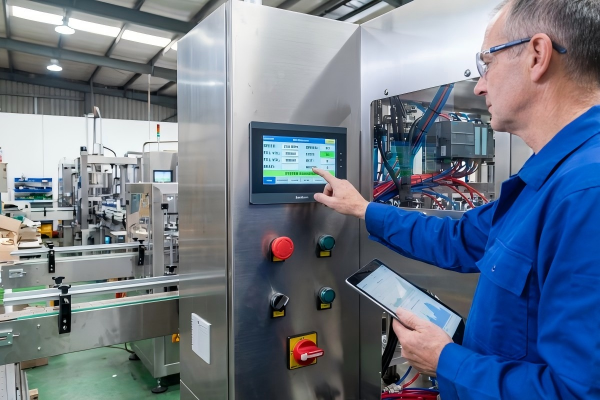
When we design our machines at RITOPACK, we focus heavily on making them powerful yet simple to operate. The "magic" behind speed adjustment isn't magic at all; it's just smart, reliable engineering designed for the user. You don't need to be a programmer to get the most out of our equipment.
The Brain and the Interface: PLC and HMI
Think of the PLC as the machine's brain. It takes instructions and executes them perfectly. The HMI, which is the touch screen, is how you communicate with that brain. I've seen operators who were initially nervous about using a new machine become experts in just a few hours. That's because we design our HMI software to be intuitive. You see a picture of your bottle, you enter the volume you need, and you adjust a simple slider for the speed. The PLC handles all the complex calculations in the background.
Powering the Movement: Servo Motors vs. Pneumatic Controls
The two main technologies that control the filling action are servo motors10 and pneumatic systems11.
- Servo Motors offer incredible precision. They can control the speed, acceleration, and position of the filling piston with pinpoint accuracy. This is ideal for expensive products or when fill accuracy is absolutely critical, like in the pharmaceutical or cosmetics industries.
- Pneumatic Systems use compressed air to drive the pistons. They are very reliable, cost-effective12, and great for simpler applications where extreme precision isn't the top priority.
We offer both options because every customer has different needs.
| Control System | Precision | Cost | Best For |
|---|---|---|---|
| Servo Motor | Very High | Higher | Pharmaceuticals, cosmetics, varied products. |
| Pneumatic | Good | Lower | Simple, high-volume, single-product lines. |
Does changing the filling speed affect the accuracy of the fill volume?
You worry that speeding up your production line1 will lead to inaccurate fills. Inconsistent product amounts can damage your brand's reputation and lead to costly product giveaways.
Yes, speed can affect accuracy if not managed correctly. However, modern automatic fillers, especially those with servo-driven or flow meter technology13, are designed to compensate. They maintain high accuracy across a wide range of speeds by precisely controlling the entire filling cycle.
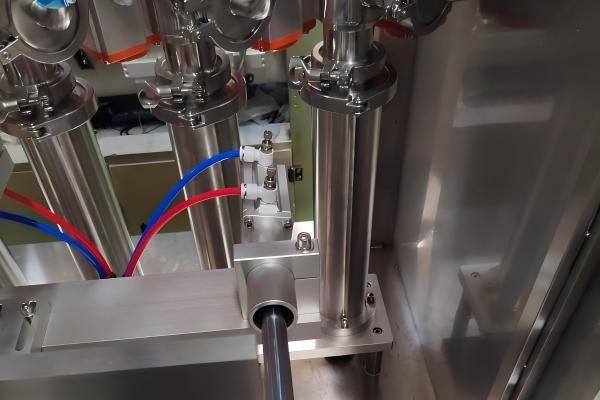
This is a question I get all the time, and it's a very important one. The answer is that a well-engineered machine maintains accuracy at any speed. It’s one of the key areas our R&D team has focused on for over a decade. It's not just about going fast; it's about being accurate and consistent while going fast.
The Physics of Filling
When you fill too quickly, two things can happen. With thin liquids, the momentum of the liquid can cause it to splash or drip even after the valve closes, leading to an overfill. With thicker liquids, filling too fast can create air pockets, leading to an underfill. A basic machine can't account for this. An advanced machine, however, has features designed specifically to solve this problem.
Technologies That Guarantee Accuracy
Our machines at RITOPACK use intelligent systems to ensure every fill is perfect.
- Two-Stage Filling: A common technique we program into our servo-driven machines is a two-stage fill. The machine will perform the bulk of the fill at a very high speed (maybe 95% of the volume) and then automatically slow down for the final "top-off." This gives you the best of both worlds: high-speed efficiency and precise, drip-free accuracy.
- Flow Meter Technology: For some applications, we use flow meter fillers. These devices measure the exact volume of liquid that passes through them and shut a valve the instant the target volume is reached. This method is incredibly accurate and is less affected by changes in product temperature or pressure.
Ultimately, a modern filling machine2's programmability ensures that speed and accuracy work together, not against each other.
Conclusion
Adjusting filling speed is a vital feature of modern machines. It boosts efficiency and ensures accuracy, making it essential for any flexible and competitive production line.
Discover the key components that contribute to a smooth and efficient production line. ↩
Explore how filling machines can enhance your production efficiency and accuracy. ↩
Find solutions to common production bottlenecks that can hinder your efficiency. ↩
Understand how different liquid characteristics affect machine settings for optimal performance. ↩
Learn how adjusting filling speed can significantly improve your manufacturing process. ↩
Discover effective strategies to enhance production efficiency in your operations. ↩
Explore best practices to streamline and optimize your manufacturing process. ↩
Gain insights into PLC technology and its role in modern manufacturing. ↩
Learn about the significance of HMIs in enhancing user experience and control. ↩
Explore the benefits of servo motors for precision and efficiency in filling applications. ↩
Discover how pneumatic systems operate and their applications in manufacturing. ↩
Find cost-effective solutions that can enhance your production efficiency without breaking the bank. ↩
Explore how flow meter technology enhances accuracy in liquid filling processes. ↩