

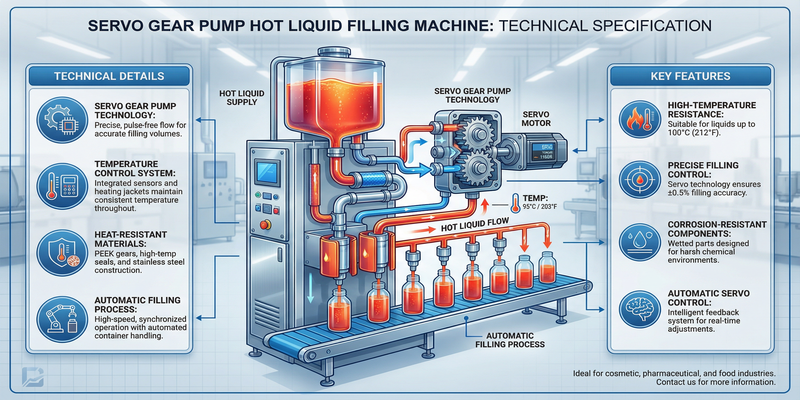
Struggling to fill hot products like sauces or waxes? Using the wrong equipment can cause damage and inaccurate fills. A servo gear pump filler1 is built for these challenges.
Yes, a liquid filling machine2 with an automatic servo gear pump can absolutely fill hot liquids. The key is ensuring the machine's components, like seals and gaskets, are made from heat-resistant materials3. The servo motor's precision also helps manage changes in liquid viscosity caused by heat.
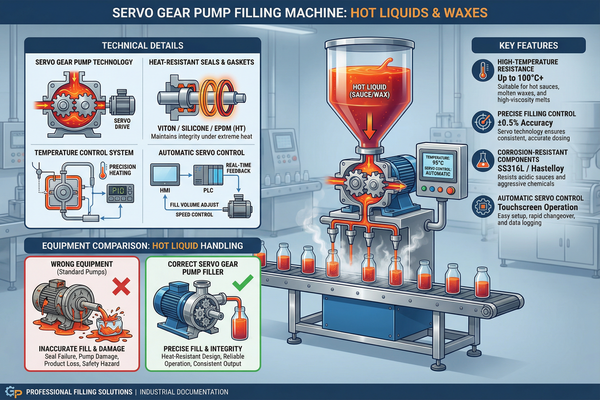
I get this question all the time from my clients in the food and cosmetics industries4. They're worried that the high temperature of their product will damage the filling machine or lead to inconsistent volumes. It’s a very valid concern. The answer isn’t just a simple “yes.” It really depends on how the machine is built and what materials are used. So, let's explore what makes these machines so capable and what you need to check before you start filling hot liquids. This will help you make the right choice for your production line5.
What makes a servo gear pump suitable for hot liquids?
You know it's possible, but how does it actually work? Using a standard machine for a hot-fill application can lead to leaks and breakdowns. Let's look at the key parts that make all the difference.
A servo gear pump's suitability for hot liquids comes down to its construction materials and the precision of the servo motor. Heat-resistant seals, durable metals, and precise motor control prevent damage and ensure accurate fills even when temperatures rise. This combination is what makes it a reliable choice.
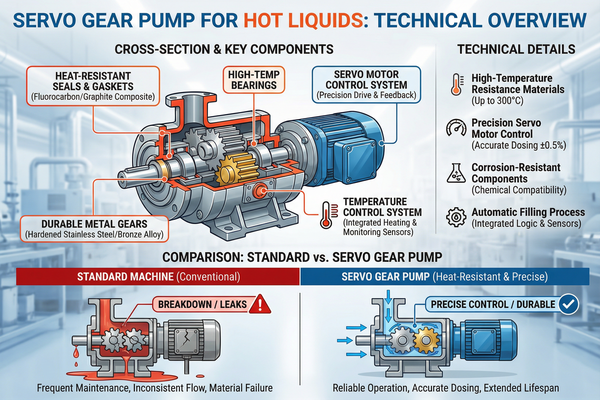
When we design a machine at RITO Pack, we focus on a few critical areas to make sure it can handle the heat. It’s not just about one part; it's about how the entire system works together. The gear pump itself is a positive displacement pump, which is great for accuracy, but the real magic comes from the servo motor and the materials we choose. The servo motor gives us incredible control over the filling process. We can program it to start slow, speed up, and then slow down again to prevent splashing and ensure a clean fill. This is especially important with hot liquids, as their viscosity can change dramatically. The other critical piece is the material science behind the components that touch your product.
Key Components for Hot-Fill Applications
The pump head, gears, and all wetted parts must be able to withstand high temperatures without warping or degrading. We typically use high-grade stainless steel, like 316L, which has excellent heat and corrosion resistance6. But the real heroes are often the seals and gaskets. These small parts are usually the first to fail in a high-temperature environment if they aren't right for the job.
| Material | Typical Max Temperature | Common Use Case |
|---|---|---|
| Silicone | ~200°C (392°F) | Food products, some oils |
| Viton (FKM) | ~200°C (392°F) | Chemicals, oils, acids |
| Teflon (PTFE) | ~260°C (500°F) | Aggressive chemicals, very high temps |
Choosing the right seal material is a conversation I have with every client. It depends entirely on their product, the cleaning process, and the operating temperatures. This level of detail ensures the machine we deliver will work reliably for years.
What are the key limitations and considerations?
So you're ready to invest, but what are the hidden risks? Overlooking key specifications can lead to costly mistakes and downtime. You need to understand the machine's limits before you commit.
The main limitations are the maximum temperature rating7 of the machine's components and the liquid's viscosity at that temperature. Always confirm the manufacturer's specifications for the entire system. Also, consider how heat affects your product’s flow, as this can impact fill accuracy and speed.
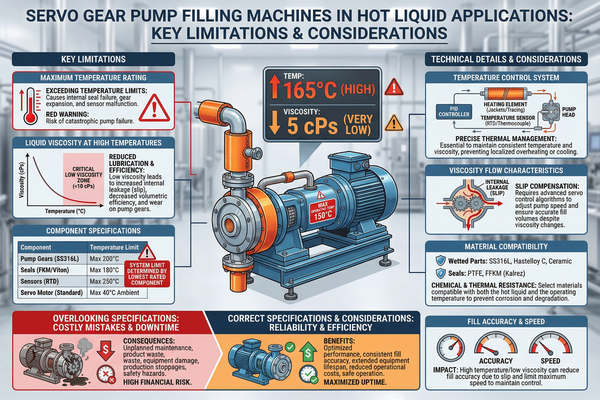
A machine is only as strong as its weakest link. For hot-fill machines, that weak link is often the component with the lowest temperature tolerance. You can have a pump body rated for 250°C, but if the seals are only rated for 150°C, then your operational limit is 150°C. This is something I always emphasize. We need to look at the entire system, not just one part. Beyond the machine itself, you also have to think about your product and your process. Hot liquids behave differently than cold ones, and this has a real impact on production.
Understanding Temperature Ratings
Every part of the filling machine that comes into contact with your product has a specific temperature rating7. This includes the hopper, the tubing, the pump itself, and the filling nozzle. When you're looking for a machine, you must ask for the temperature rating7 of the entire system. At RITO Pack, we provide a clear specification sheet that lists these ratings so there's no confusion. This transparency is crucial for safe and effective operation.
Viscosity Changes and Drip Control
Most liquids get thinner as they heat up. For example, honey or thick caramel sauce can become very watery when hot. This change in viscosity affects how the filling machine performs. A thinner liquid might drip from the nozzle after the fill is complete, leading to messy containers and product waste. A servo gear pump helps manage this because we can program a "suck-back" feature. After the fill, the motor reverses slightly, pulling a small amount of product back into the nozzle. This creates a clean cutoff and prevents dripping, even with very thin, hot liquids.
Operator Safety
Finally, we can't forget about the people running the machine. Hot liquids create hot surfaces. The machine must be designed with safety in mind. This can include insulated hoppers, safety guards around the filling area, and clear warning labels. We also recommend proper training for operators on handling hot products and understanding the machine’s safety features. A safe process is an efficient process.
How does RITO Pack ensure its machines handle hot liquids effectively?
Theory is one thing, but how does it translate to a real machine on your factory floor? You need a partner who has solved these problems before. We build our machines to handle your specific challenges.
At RITO Pack, we use high-grade materials8 like 316L stainless steel9 and application-specific, heat-resistant seals. Our machines are customized based on your product's temperature and viscosity. We consult with you to ensure your filling line is safe, efficient, and reliable for your hot-fill needs.
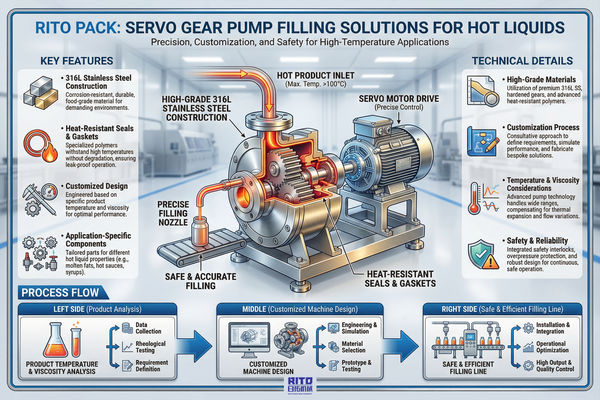
We don't just sell machines; we provide solutions. A few years ago, a client came to us because they were launching a new line of gourmet hot sauces. Their existing piston filler couldn't handle the product's temperature and acidity, causing the seals to degrade quickly. They were experiencing constant downtime and product loss. This is a story I've heard many times. We approached their problem not by just selling them a standard machine, but by engineering a solution tailored specifically for their hot sauce.
Customization is Our Standard
For this hot sauce client, we started by analyzing their product. It was filled at 85°C and had a high vinegar content. We built a servo gear pump filling machine using 316L stainless steel9 for all contact parts to resist the acid. We then selected Viton seals, which are perfect for both the high temperature and the chemical composition of the sauce. We also designed a special shut-off nozzle that could handle the thin, hot liquid without dripping. The result was a machine that not only worked flawlessly but also increased their production speed.
Our Solutions for Hot-Fill Industries
Different industries have different needs, even within the hot-fill category. We've developed a range of solutions based on our experience.
| Industry | Common Challenge | RITO Pack Solution |
|---|---|---|
| Food & Beverage | Filling hot sauces, jams, or soups without drips. | Servo-controlled suck-back feature10 and custom nozzles. |
| Cosmetics | Handling hot-fill waxes or balms that solidify quickly. | Heated hoppers and temperature-controlled nozzles11. |
| Chemicals | Filling corrosive materials at high temperatures. | Use of corrosion-resistant materials like 316L steel and PTFE. |
This process of consultation, analysis, and customization12 is at the heart of what we do. We believe that the right machine can transform a production line5, and we are committed to providing that for every one of our clients.
Conclusion
A servo gear pump filler1 is a great choice for hot liquids. Just make sure you confirm the machine's materials and temperature rating7s. With the right equipment, your hot-fill process will be seamless.
Explore this link to understand the mechanics and benefits of servo gear pump fillers for hot liquids. ↩
Learn about the essential features of liquid filling machines designed for high-temperature applications. ↩
Discover the top materials that ensure durability and performance in high-temperature filling processes. ↩
Understand the specific challenges these industries encounter when filling hot products. ↩
Learn how implementing a servo gear pump can streamline your production line for hot fills. ↩
Explore materials that provide both heat and corrosion resistance for reliable filling operations. ↩
Explore why knowing the temperature rating of filling machines is crucial for safe operations. ↩
Explore the significance of high-grade materials in enhancing the performance of filling machines. ↩
Learn about the benefits of using 316L stainless steel in high-temperature and corrosive environments. ↩
Discover how the suck-back feature prevents drips and ensures clean fills for hot liquids. ↩
Find out how temperature-controlled nozzles improve the filling of hot products. ↩
Understand how tailored solutions can enhance the efficiency of filling machines for specific products. ↩