

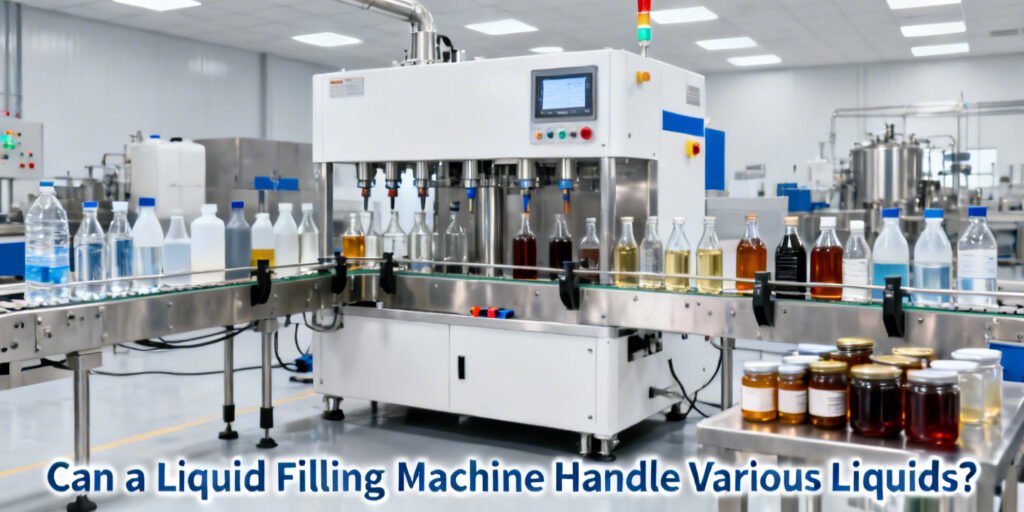
Confused about which filling machine to buy? The wrong one causes spills and slows production. Let's find the right machine for your specific liquid.
Yes, a liquid filling machine1 can handle various liquids, from thin water to thick creams. However, the key is selecting the right filling technology2, like piston or pump fillers3, based on the liquid's viscosity4 to ensure accuracy and efficiency.
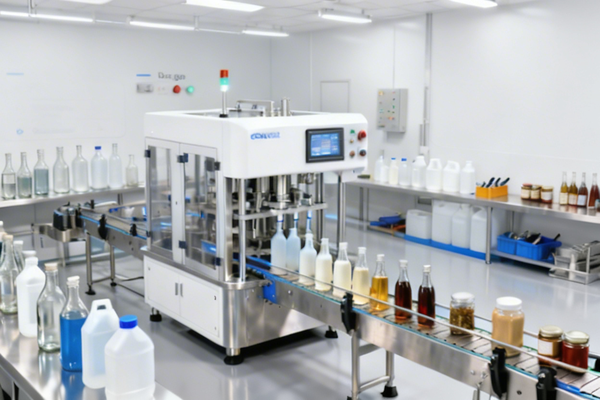
So, we know that one size doesn't fit all. But how do you know which "size" is right for you? It all starts with understanding a key property of your product: its viscosity4. This single factor is the most important piece of the puzzle. Let's break down what that means and why it's so critical for your production line's success. Understanding this will save you from costly mistakes and ensure your operations run smoothly from day one.
How does liquid viscosity4 affect your choice of filling machine?
Is your thick cream or thin juice causing filling problems5? Inaccurate fills lead to wasted product and money. Matching the filler to your liquid's viscosity4 is the solution.
Viscosity determines how a liquid flows. Low-viscosity4 (thin) liquids like water work well with gravity or overflow fillers6. High-viscosity4 (thick) liquids like honey or paste require the power of a piston or pump filler to ensure accurate, consistent dosing.
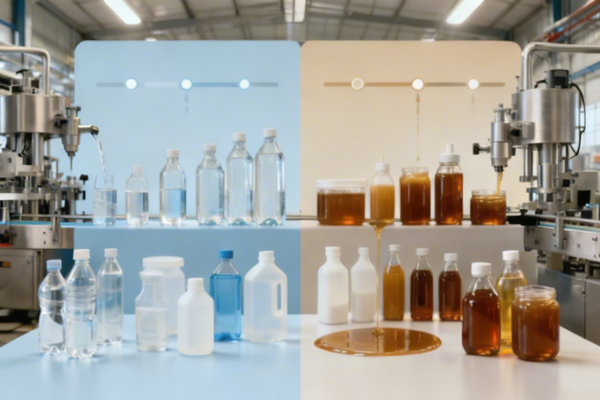
Viscosity is simply a measure of a liquid's resistance to flow. Think about the difference between pouring water and pouring honey. Water flows freely, so we call it a low-viscosity4 liquid. Honey flows very slowly, so it has high viscosity4. This property is the first thing we look at when recommending a filling machine because a mismatch can cause major problems like inaccurate fills, product spillage, and slow production speed7s. For instance, trying to fill a thick paste with a machine designed for water would be incredibly slow and imprecise. That's why we must categorize products based on their flow characteristics to select the right equipment.
Low-Viscosity Liquids
These are free-flowing, water-like products. Examples include juices, perfumes, inks, and light oils. Because they flow so easily, the main challenge is controlling the flow to prevent splashing, foaming, and dripping.
- Recommended Machines: Gravity fillers and overflow fillers6 are excellent choices. Gravity fillers are simple and cost-effective, while overflow fillers6 ensure every bottle is filled to the same cosmetic level, which is perfect for transparent containers.
High-Viscosity Liquids
These are thick products that do not flow easily on their own. This includes creams, gels, thick sauces, and pastes. They require a machine that can provide a positive force to push the product into the container accurately.
- Recommended Machines: Piston fillers and pump fillers3 are the industry standard here. They use mechanical force8 to dispense a precise volume of product, regardless of its thickness.
| Viscosity Level | Product Examples | Recommended Machine Type |
|---|---|---|
| Low | Water, Juice, Tea, Perfume | Gravity Filler, Overflow Filler |
| Medium | Lotion, Shampoo, Liquid Soap | Piston Filler, Lobe Pump Filler |
| High | Cream, Honey, Tomato Paste, Gel | Piston Filler, Gear Pump Filler |
What are the main types of liquid filling technologies?
Feeling lost with terms like piston, pump, or overflow fillers6? Choosing the wrong technology means poor performance. Let's quickly explain the main types and their best uses.
The main types are piston, pump, gravity, and overflow fillers6. Piston fillers are great for all viscosities, especially thick products. Pump fillers offer flexibility for various products. Gravity and overflow fillers6 are ideal for thin, non-foaming, and foamy liquids, respectively.
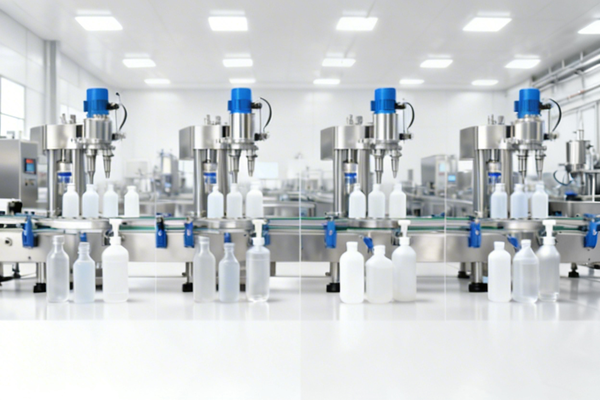
Choosing the right technology can feel overwhelming, but it becomes simple when you match it to your product. At RITO9, we work with these systems every day, and each one has a specific job it does best. Think of it like using the right tool for a home repair project—a hammer won't work when you need a screwdriver. The same logic applies here. A piston filler is a powerful and versatile tool, but sometimes a simpler gravity filler is all you need for a thin liquid. Understanding the core function of each machine type is the key to making an informed decision that will benefit your production for years to come.
Piston Fillers
A piston filler works like a syringe. A piston pulls back to draw a specific volume of product into a cylinder, then pushes it out into the container. This method is extremely accurate and powerful, making it perfect for both thin liquids and very thick pastes. It's our go-to solution for products that need precise volume control, from pharmaceuticals to thick cosmetic creams.
Pump Fillers
Pump fillers move product from a bulk tank to the container using a pump. The type of pump (like a lobe, gear, or peristaltic pump) can be changed based on the product. Lobe pumps are gentle and good for products with solids, like sauces. Gear pumps provide a consistent flow for oils and gels. Peristaltic pumps are ideal for sterile applications because the product only touches the inside of a tube.
Gravity and Overflow Fillers
These are simpler systems designed for low-viscosity liquids10 liquids. A gravity filler holds the product in a tank above the bottles and lets gravity do the work of filling. An overflow filler also uses a tank but fills each bottle to a specific level, pushing any excess product back into the tank. This creates a perfect cosmetic fill line, which is why it's so popular for products sold in clear bottles.
How can you get a customized solution11 for your specific product?
Worried a standard filler won't handle your unique product or bottle? An off-the-shelf machine can limit your production. A customized solution11 is the key to perfect efficiency.
To get a customized solution11, you need to provide key details to your supplier. This includes your liquid's properties (viscosity4, particles), container type and size, and desired production speed7 (bottles per minute). This information allows us to build the perfect machine for you.
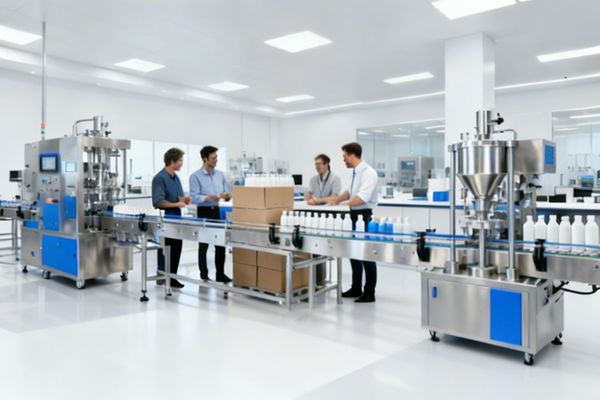
A standard machine might get the job done, but a customized solution11 will get it done perfectly. At RITO9, we believe that the best machine is one built specifically for your needs. This is where our 20+ years of R&D experience really shine. We don't just sell you a machine; we partner with you to engineer a solution. The process starts with a simple conversation where we ask the right questions. By understanding every detail of your product and production goals, we can design and build a filling machine or a complete packaging line12 that maximizes your efficiency, minimizes waste, and grows with your business.
To help us create your perfect solution, we just need to understand three key areas:
1. Your Product's Characteristics
What are you filling? Is it thick like honey or thin like water? Does it foam? Does it contain particles like fruit pulp? Is it corrosive? The answers help us select the right filling technology2, nozzles, and construction materials (like stainless steel 316L for food-grade products).
2. Your Container Specifications
What kind of containers are you using? We need to know the material (glass, plastic), shape, volume, and the diameter of the opening. This information determines the type of nozzles, container handling systems, and change parts needed for your machine.
3. Your Production Goals
What is your target speed? Are you looking to fill 20 bottles per minute or 120? This tells us whether a semi-automatic machine is a good starting point or if you need a fully automatic, integrated production line. We can build a solution that meets your current demand and allows for future expansion.
Conclusion
In summary, finding the right liquid filler depends on your product's unique needs. We are here to help you build the perfect, customized solution11 for your production line.
Explore this link to understand the fundamentals of liquid filling machines and their applications. ↩
Learn about various filling technologies to choose the best one for your production needs. ↩
Understand the functionality of pump fillers and their versatility for different liquids. ↩
Discover the critical role viscosity plays in selecting the right filling machine. ↩
Identify potential filling problems and how to avoid them with the right equipment. ↩
Learn how overflow fillers create perfect cosmetic fill lines for transparent containers. ↩
Understand how production speed impacts your choice of filling technology. ↩
Learn about the importance of mechanical force in achieving accurate fills for thick liquids. ↩
Explore RITO's expertise in providing customized filling solutions tailored to your needs. ↩
Discover the characteristics of low-viscosity liquids and how to fill them efficiently. ↩
Learn how to tailor a filling machine to your specific product needs for optimal efficiency. ↩
Discover the elements of a complete packaging line and how they integrate with filling machines. ↩